
Libya Culture · Music Archive · Sound of Libya
Libyan Music: Traditional Sounds, Instruments & Artists
Libyan music reflects the history, geography and social life of the country. From the refined Maalouf tradition of Tripoli to southern rhythms, wedding songs, oral poetry and popular performers, the music of Libya brings together Arab, Amazigh, Tuareg, Toubou, Saharan and Mediterranean influences. This guide introduces the sounds, instruments, regional traditions and selected Libyan artists that help tell that cultural story.

Quick Music Guide
Libyan Music at a glance
Libyan music is not one single genre. It changes from region to region and from one social setting to another. Some traditions are formal and urban, while others belong to the Sahara, family celebrations, oral poetry and popular performance.
About this guide
A practical introduction to Libyan Music
Understanding Libyan music means looking beyond a list of singers or instruments. Music in Libya belongs to particular places, communities and occasions.
A formal musical society in Tripoli has a different atmosphere from a wedding celebration, while the sound of southern Libya reflects another cultural environment again. Those differences are part of the richness of Libyan musical heritage.
This guide therefore combines musical styles, instruments, social traditions and selected performances. The videos later in the page allow international readers to hear several Libyan artists directly rather than learning about them only through written descriptions.
You can also read our Libya National Anthem guide to explore another relationship between music, history and national identity.
Musical Identity
What defines Libyan Music?
Libyan music is shaped by both geography and cultural memory. Libya stretches from the Mediterranean coast deep into the Sahara, and the sound of the country reflects that enormous geographic range.
Coastal cities developed within Mediterranean and North African cultural networks. Southern communities were connected by oasis life, trans-Saharan movement and local traditions. Music grew in all of these environments, which is why it is difficult to describe Libya through a single musical style.
In Tripoli, one of the best-known traditional forms is Maalouf, a branch of the wider Andalusian musical heritage of North Africa. In the south, forms such as Merksawi developed within a very different social and geographic setting.
Amazigh, Tuareg and Toubou communities also add distinct traditions to the cultural map. These musical worlds may differ in language, instruments, rhythm and performance, but all contribute to the wider story of Libyan music.
Poetry is another important connection. Song and poetic expression are often closely related, with lyrics dealing with love, absence, pride, family, memory and attachment to place. A strong melody may be remembered for decades, but so can a powerful line of poetry.
Music is also social. It accompanies weddings, celebrations and cultural events. Some traditions are preserved through institutions and formal ensembles, while others continue because families and communities keep performing them.
Tripoli & the Coast
Libyan Music in Tripoli: the Maalouf tradition
Maalouf represents one of the more formal traditions within Libyan music. It belongs to the wider Andalusian musical heritage that survived and developed in cities across North Africa.
Tripoli became one of the important urban centers where this heritage continued. Over time, Maalouf became part of the city’s own cultural identity rather than simply a musical form imported from somewhere else.
The style is structured and often performed by ensembles. Melody, rhythm, poetry and careful musical organization all matter. The result is very different from informal celebration music, although both belong within the wider musical life of Libya.
Maalouf also shows how much a city can be understood through sound. Visitors usually explore Tripoli through the medina, mosques, markets, historic houses and waterfront. Music adds another cultural layer.
If you are planning time in the capital, you can continue with our Things to Do in Tripoli guide.
For further external reading about traditional Libyan music, see Music In Africa .
Southern Libya
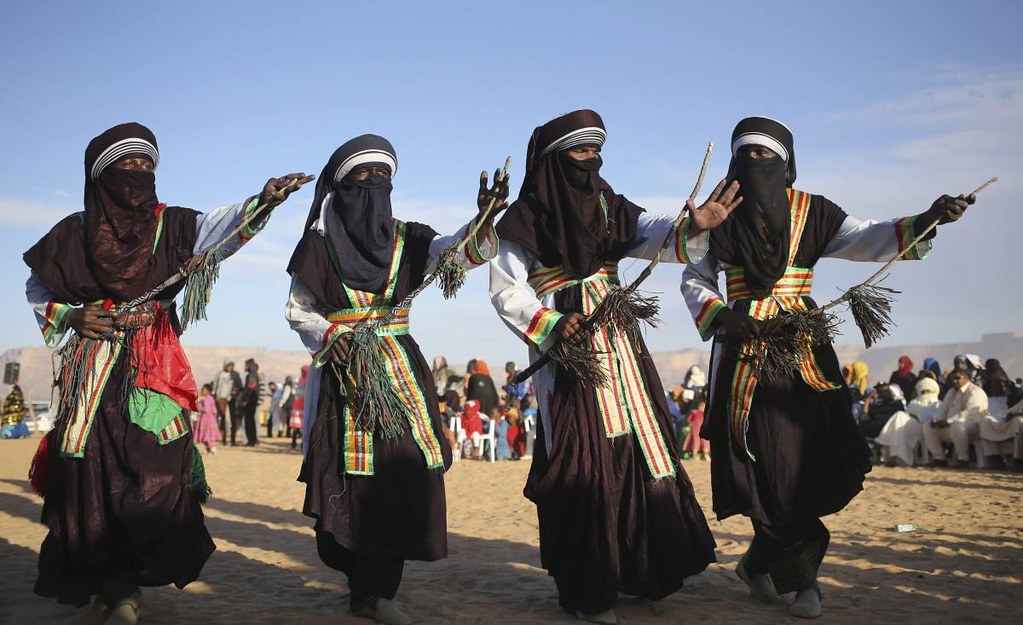
Libyan Music in Fezzan and the Sahara
Southern Libya gives Libyan music another character. Fezzan has long been a meeting place between oasis communities, travelers and cultures connected across the Sahara.
One of the musical styles associated with this region is Merksawi. Its roots are linked with Murzuq, an oasis city that historically brought different communities together.
Merksawi developed as popular social music and uses rhythm prominently. Its history also demonstrates how a regional form can move beyond its original home and become appreciated in other parts of Libya.
The Tuareg cultural world provides another soundscape. Tuareg traditions connect poetry, music and social memory. The wider Tuareg world is also associated with the imzad, a bowed one-string instrument traditionally played by women.
Toubou musical culture contributes another southern tradition. Oral performance and local instruments form part of a broader Saharan identity that differs from the classical urban traditions of the north.
These differences are important. They demonstrate that traditional Libyan music is not simply coastal Arab music extended southward. The Sahara contains cultural traditions with their own histories, sounds and ways of performing.
Travelers interested in southern Libya can also explore our Tadrart Acacus Rock Art guide for another look at the cultural heritage of the Libyan Sahara.
Merksawi
A popular musical tradition with roots in Murzuq and the culturally diverse oasis environment of southern Libya.
Music & poetry
Tuareg traditions connect voice, poetry, musical performance and cultural memory across the Sahara.
Saharan identity
Toubou musical traditions add another regional sound and identity to the diversity of southern Libya.
Traditional Instruments
Instruments heard in Libyan Music
There is no single instrument that defines all Libyan music. Different traditions use different combinations of strings, percussion, reeds and voice.
Oud
The oud is one of the best-known string instruments in Arab music and supports melody, accompaniment and vocal performance.
Darbuka
This goblet-shaped drum provides clear rhythmic patterns and is widely associated with social and popular music.
Bendir
The frame drum works especially well in communal performance where repetition and shared rhythm are important.
Reed & Wind Instruments
Traditional reed instruments add a powerful, bright sound to regional performances and festive settings.
Instrument choice often tells us something about the context of the performance. A formal Maalouf ensemble does not sound like a wedding celebration, and the sound of a southern gathering may be different again.
Percussion is particularly important in many popular traditions because rhythm helps transform listening into participation. Clapping, movement and group response can become part of the music itself.
Beyond entertainment
Libyan Music often begins with words
In many traditions, Libyan music is closely connected with poetic expression. The words can carry as much cultural importance as the melody itself.
Songs may deal with love, separation, homeland, family, memory and personal experience. A familiar lyric can immediately connect listeners with another period of their lives.
This relationship between language and music also helps explain the importance of national songs. Our Libya National Anthem guide explores that connection through the story of “Libya, Libya, Libya.”
Music in Social Life
Libyan Music at weddings and celebrations
Weddings remain one of the most important living environments for Libyan music. They are places where traditional rhythms, familiar songs and newer popular music can meet naturally.
The exact sound varies by region and family. A celebration in Tripoli may not follow the same musical tradition as one in Fezzan, Benghazi or an Amazigh community.
Music helps establish the emotional rhythm of an event. Singing, percussion, clapping and ululation can all become part of the collective experience rather than something performed only by professional musicians.
Heritage festivals serve another purpose. They create public spaces in which regional traditions can be performed, remembered and introduced to younger audiences.
Music as celebration
Weddings remain one of the strongest living settings for traditional and popular Libyan musical expression.
Music as heritage
Cultural festivals provide a public stage for styles connected with particular regions and communities.
Music as memory
Familiar songs are often passed between generations simply by being heard repeatedly within family and social life.
Listen to Libya
Featured Libyan Artists & Selected Performances
Reading about Libyan music can explain styles and instruments, but listening gives the subject another dimension.
The performers below are included as examples rather than as a ranking. Each recording adds another voice to the page and helps visitors hear some of the variety found within Libyan popular song.
We have deliberately kept the descriptions simple. The purpose of this section is to let the music speak for itself without making unsupported claims about an artist’s biography or career.
Contemporary Perspective
Libyan Music today: preservation and new audiences
Recording technology and online platforms have changed how Libyan music reaches listeners. Performances from different generations can now be discovered by people who may never have heard them through radio, cassette or live performance.
This is particularly useful for people outside Libya. A listener can move from traditional music to popular song, compare different singers and begin to hear differences in voice, rhythm and language.
Digital access also gives older recordings another life. Music that may once have circulated locally can now become available to Libyans abroad and to international audiences curious about the country’s culture.
At the same time, context still matters. A YouTube clip can preserve the sound, but it may not explain the occasion, region or cultural setting in which a song belongs.
That is why preserving Libyan music involves more than uploading recordings. It also means documenting names, traditions, instruments and the cultural stories that surround them.
For Travelers
Experiencing Libyan Music during a journey
Travelers usually come to Libya for history, archaeology, desert landscapes and culture rather than for a music tour alone. Even so, music can become one of the more memorable parts of a journey.
It may be heard during a family celebration, heritage event, cultural evening or local gathering. Sometimes the most interesting encounters happen naturally rather than through a formal concert.
Travelers who are especially interested in Libyan music should mention that interest when discussing their itinerary. Cultural interests can help shape how much time is spent in cities, heritage areas and local communities.
For broader trip planning, see our Travel to Libya guide or explore our Libya itineraries .
Culture & Memory
Libyan Music and cultural identity
Music helps people remember places, relationships and moments in time. That emotional role is one reason Libyan music remains important even as the way people listen changes.
Regional traditions do not weaken a shared cultural identity. They make it richer. Tripoli’s Maalouf, southern Merksawi, Saharan traditions, wedding songs and popular singers can all belong within the wider musical story of Libya.
For an international visitor, listening to Libyan artists adds another dimension to understanding the country. Libya is not only seen through monuments and landscapes; it can also be heard through melody, rhythm and language.
Frequently Asked Questions
Libyan Music FAQ
What is Libyan music known for?
What is Maalouf in Libya?
What is Merksawi music?
Does southern Libya have its own musical traditions?
Which instruments are used in Libyan music?
Is Libyan music connected with poetry?
Which Libyan artists are featured on this page?
Can travelers experience Libyan music during a trip?
Is the Libya National Anthem part of Libyan music?
Continue Exploring
More Libya culture and travel guides
Experience Libyan Culture
Discover Libya through music, heritage and local traditions
Libya Adventures has been organizing journeys in Libya since 2011. If music, history and cultural traditions are important to you, tell us about your interests when you contact us and we can discuss how they may fit into a private Libya itinerary.
Send an Enquiry →