
Souks · Crafts · Textiles · Souvenirs
Shopping in Libya: Souks, Markets & What to Buy
Shopping in Libya is less about polished retail districts and more about discovering everyday city life, traditional souks, local craftsmanship, fabrics, perfumes, metalwork, jewellery and gifts connected with the places you visit.
Shopping in Libya
More than souvenirs Markets offer a glimpse into everyday life, local craftsmanship and the character of Libya’s cities.A different kind of shopping experience
Shopping can be one of the most enjoyable ways to slow down during a trip through Libya. After a morning among Roman ruins or a long drive between cities, a market gives you a completely different view of the country. You hear conversations at the counters, see fabrics stacked from floor to ceiling, smell perfume oils and spices, and notice how old streets are still used as working commercial spaces rather than preserved only for visitors.
Tripoli offers the strongest mix of historic souks and modern city shopping. Benghazi has its own commercial districts and market culture. In Ghadames and other parts of the south, shopping can be more closely connected with local crafts, clothing and items that reflect desert traditions.
This guide focuses on the practical side of shopping in Libya: where to look, what kinds of products you may find, how bargaining works, how to pay, what to ask before buying, and how to make shopping fit naturally into a wider cultural itinerary.
Cities & markets
Where to shop in Libya
Libya’s shopping culture is spread across old-city souks, neighbourhood markets, commercial streets, specialist shops and modern retail areas. For travellers, the most interesting places are usually the ones that combine shopping with the character of the city around them.
Tripoli
Tripoli is the easiest place to begin. The Old City, or Medina, connects historic buildings, mosques, workshops and traditional commercial streets. Shops may specialise in fabrics, jewellery, perfumes, household goods, leather, metalwork and gifts.
Benghazi
Central shopping streets and local markets can be good places to look for clothing, household goods, perfumes, accessories, sweets and everyday Libyan products during a wider Cyrenaica journey.
Ghadames
Ghadames can be interesting for travellers looking for textiles, clothing, decorative pieces and items connected with oasis and Saharan traditions.
Shopping map
Three very different shopping settings
Tripoli, Benghazi and Ghadames offer different experiences: historic capital-city souks, eastern urban markets and shopping connected with an oasis environment.
The capital’s old city
Tripoli’s souks: the heart of the experience
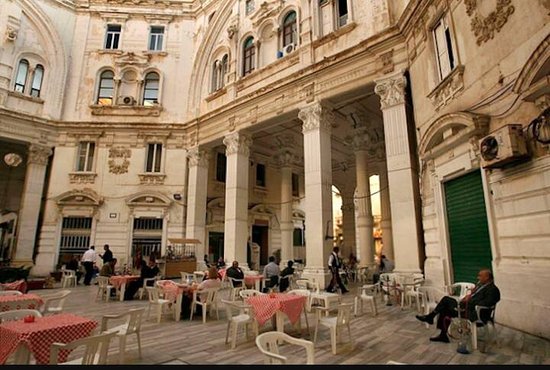
For many visitors, the souks of Tripoli are the part of shopping in Libya they remember most clearly. The setting makes the difference. You are not walking through a shopping mall designed as a single project. Instead, shops sit within streets that have developed over generations, where different trades and products have traditionally clustered in particular areas.
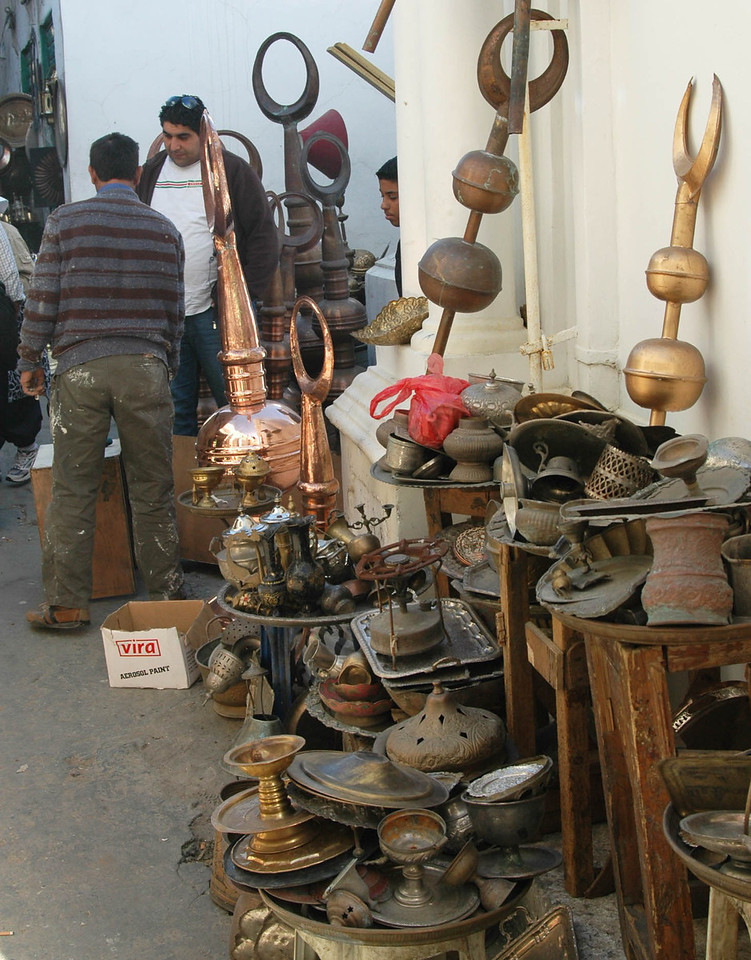
Some lanes are brighter and busier, while others feel almost hidden. One doorway may open onto shelves of perfume, another onto rolls of fabric, embroidered clothing or wedding textiles. Metal objects and decorative pieces catch the light outside small shops. Jewellers display rings, bracelets and traditional designs behind glass.
The best approach is to treat the Medina as part market and part walking experience. Look at several stores before deciding what interests you, and ask questions when a product or craft is unfamiliar.
The souks can also be combined naturally with the Arch of Marcus Aurelius, historic streets and other central sights. See our Things to Do in Tripoli guide when planning the rest of your city day.
Do not assume every shop follows the same opening schedule. Hours can vary by business, day, season and religious calendar, so it is better to check locally than rely on an old fixed closing time.
Souvenirs & crafts
What to buy in Libya
There is no single “must-buy” souvenir. The best purchase is usually something you genuinely like and can use, wear or display when you return home.
Traditional metalwork
Metalwork is one of the most visually striking things you may encounter in older shopping streets. Brass, copper and other metal objects can include trays, coffee pots, decorative vessels, lamps, incense burners and pieces intended for the home.
Look closely at workmanship and ask whether an item is new, handmade, machine-made or older. Avoid purchasing archaeological material or anything that could reasonably be considered protected cultural heritage.
Fabrics & traditional clothing
Fabric shops can be among the most colourful places in a Libyan market. You may find plain cloth, richly decorated textiles, material for formal clothing, scarves and pieces used for weddings or special occasions.
Traditional clothing varies by region and occasion. Ask what a garment is called and when it is normally worn rather than treating every embroidered piece as a generic costume.
Jewellery
Jewellery can range from contemporary pieces to designs influenced by older North African and Saharan traditions. Rings, bracelets, necklaces and earrings are available in different materials and price ranges.
If something is sold as silver or another precious metal, ask about purity and hallmarks. For higher-value purchases, request a receipt describing the item.
Perfumes, oils & incense
Perfume shops add another sensory layer to the market. You may encounter bottled fragrances, concentrated perfume oils, incense and scented products for the home.
Take your time when comparing scents, and remember that liquids need to be packed according to the rules of your airline and airport.
Leather goods
Bags, belts, wallets, shoes and small leather accessories can appear in traditional markets and modern stores. Quality varies, so inspect stitching, zips, lining and finishing instead of assuming every product is handmade or locally produced.
Pottery & decorative pieces
Small bowls, plates, serving pieces and decorative objects can make attractive gifts. If you buy something fragile, ask the seller to wrap it carefully and add extra protection before packing it in your luggage.
Spices, dates & sweets
Food shops and markets can be interesting even when you do not plan to carry much home. Spices, dates, sweets and packaged foods provide a simple connection with Libyan everyday life.
Choose sealed products for travel where possible and check the import rules of the country you are entering.
Small everyday souvenirs
Not every souvenir needs to be expensive or formally traditional. Books, postcards, locally designed gifts and small objects connected with Tripoli or another city can be easier to carry and may become equally meaningful memories.

Buying naturally
Shopping etiquette in a Libyan souk
Shopping in a traditional market is social. A greeting before asking for a price creates a more pleasant interaction, and a few words of Arabic can go a long way even if the conversation continues in English or through your guide.
Bargaining may be possible in some traditional shops, especially where prices are not clearly marked, but it is not a universal rule. Fixed-price stores and many modern retailers are not places where you should negotiate. In a souk, you can politely ask whether the price is final. If there is room to negotiate, keep the exchange friendly. If the price does not suit you, it is perfectly acceptable to thank the seller and move on.
Photography deserves the same courtesy. Markets can be visually irresistible, but shops are workplaces and people are not part of the scenery. Ask before photographing a seller, craftsman or person inside a shop.
Look at a few shops first, particularly for jewellery, leather or decorative objects.
If an item is described as handmade or locally produced, ask where it came from and how it was made.
Negotiation can be part of some souk purchases, but there is no need to turn a small purchase into a contest.
A simple request is respectful when a seller, workshop or shop interior is the main subject.
Practical shopping
Cash, cards and paying for purchases
For small market purchases, carrying cash is practical. Card acceptance can vary between hotels, larger businesses and smaller shops, and it should not be assumed that a card or foreign mobile-payment service will work everywhere. Your hotel, guide or local contact can give you the most useful current information for the area you are visiting.
Keep smaller notes available so you are not constantly trying to pay for low-value items with large denominations. Count change calmly and keep your main wallet secure rather than displaying all your cash when negotiating a small purchase.
For expensive jewellery, art or another high-value object, ask for a receipt. If the seller makes specific claims about precious-metal content, age, origin or craftsmanship, have those details written down when possible.
Opening times
Shopping during Ramadan and on Fridays
Older travel articles often give precise shopping hours for Libya, but fixed times can quickly become inaccurate. Businesses may adjust their schedules on Fridays, during Ramadan, around Eid and at other times of the year. Individual shops also make their own decisions.
During Ramadan, daytime can feel quieter in some areas, while activity may increase later in the evening after iftar. If your trip falls during Ramadan, plan with flexibility and ask locally which part of the day is best for the market you want to visit.
Read our Libyan Ramadan Traditions guide for more about how the rhythm of daily life changes during the month.
Friday schedules can also vary. Some businesses pause or open later around Friday prayers. Leave room in your itinerary and confirm the plan locally rather than building a day around an old timetable.
Tripoli idea
A simple half-day shopping route in Tripoli
If you only want to spend a few hours shopping, combine it with the Old City rather than creating a separate retail day. Begin around the historic centre and walk into the Medina at an unhurried pace. Spend the first part of the visit exploring rather than buying so you can understand what is available and compare quality.
Move through fabric, perfume, jewellery and household-goods areas, stopping when something genuinely catches your attention. Add the Arch of Marcus Aurelius and nearby historic streets so the experience does not become only about purchases. A coffee or tea break also gives you time to decide whether you want to return to a shop you saw earlier.
Finish with purchases that require more thought, such as jewellery, leather or larger decorative items. This avoids carrying bulky bags for the entire walk. If your day continues elsewhere in Tripoli, ask whether purchases can be left securely at your hotel or vehicle.
Travel planning
How shopping fits into a Libya itinerary
Shopping is best treated as part of the journey rather than the purpose of every day. Tripoli is the easiest place to dedicate a few hours to markets because shopping and sightseeing naturally overlap. Benghazi works well for an evening after a day in the city. Ghadames and southern destinations are better approached with curiosity about local products rather than expectations of large retail districts.
On longer cultural itineraries, market visits provide a useful break between archaeological sites. After spending hours at Leptis Magna, Sabratha, Cyrene or another major site, returning to a living city and walking through shops gives the day a different rhythm. It reminds you that Libya is not only a collection of ancient monuments but a contemporary country with working neighbourhoods, family businesses and commercial traditions.
To see how Tripoli, Benghazi, Ghadames and other destinations can fit together, read our Best Cities to Visit in Libya guide.
Our Libya Travel Tips page also covers practical trip preparation for everyday travel.
Before you pack
What to check before bringing a purchase home
Most normal souvenirs are straightforward, but a little common sense prevents problems. Think about the size and weight of the item, whether it is fragile, whether it contains liquid, and whether your destination country restricts certain foods, plant materials or animal products.
Be especially careful with anything presented as ancient, archaeological or historically significant. Do not buy objects that may have been removed from archaeological sites or that could be protected cultural property. If you want a historic-looking souvenir, a clearly modern reproduction is a much simpler choice.
For jewellery and expensive craftwork, retain your receipt. For liquids such as perfume oils, pack them according to airline rules. For pottery or metalwork, consider weight before committing to a large item. If you are unsure whether something can legally be exported or imported, ask before purchasing.
Frequently asked questions
Shopping in Libya FAQ
What are the best places for shopping in Libya?
What should I buy in Libya?
Can I bargain in Libyan souks?
Should I use cash or a card?
Are shops open late in Tripoli?
Can I photograph shops and market sellers?
Can I buy antiques in Libya?
Can Libya Adventures include shopping time in a private itinerary?
A memory of the journey
Take a little of Libya home with you
The best shopping experiences in Libya are not necessarily about finding the most expensive object. They are about the setting, the conversation, the process of looking and the connection between the item and the place where you found it.
A piece of fabric from a Tripoli shop, a small metal object from the Medina, perfume selected after testing several scents, or a simple gift from a neighbourhood store can carry more memory than something bought quickly from a generic souvenir shelf. Give yourself time, ask questions and buy what genuinely means something to you.
If markets and local crafts are important to you, include them from the beginning when planning the journey instead of trying to squeeze all your shopping into the final hour before departure.
Continue planning
More Libya travel guides
Planning your Libya journey?
Add markets and local shopping to your itinerary
Tell us your preferred travel dates, number of travellers and what you would like to experience. If souks, local crafts or time for shopping are important to you, we can include them naturally within your private Libya itinerary.
Send an Enquiry →