
Cyrenaica Archaeology Guide · 2026
Apollonia Libya: 8 Amazing Ancient Sights by the Mediterranean
Apollonia Libya is one of the most atmospheric archaeological sites on the coast of eastern Libya. Known today beside the town of Susa, ancient Apollonia served as the maritime gateway of Cyrene for more than a millennium, connecting the highlands of Cyrenaica with Mediterranean trade, travel and naval activity.
This guide explores the ancient harbor, Greek theater, Byzantine basilicas, Palace of the Dux, underwater remains and modern Susa, while explaining why Apollonia belongs beside Cyrene on any serious historical journey through eastern Libya.
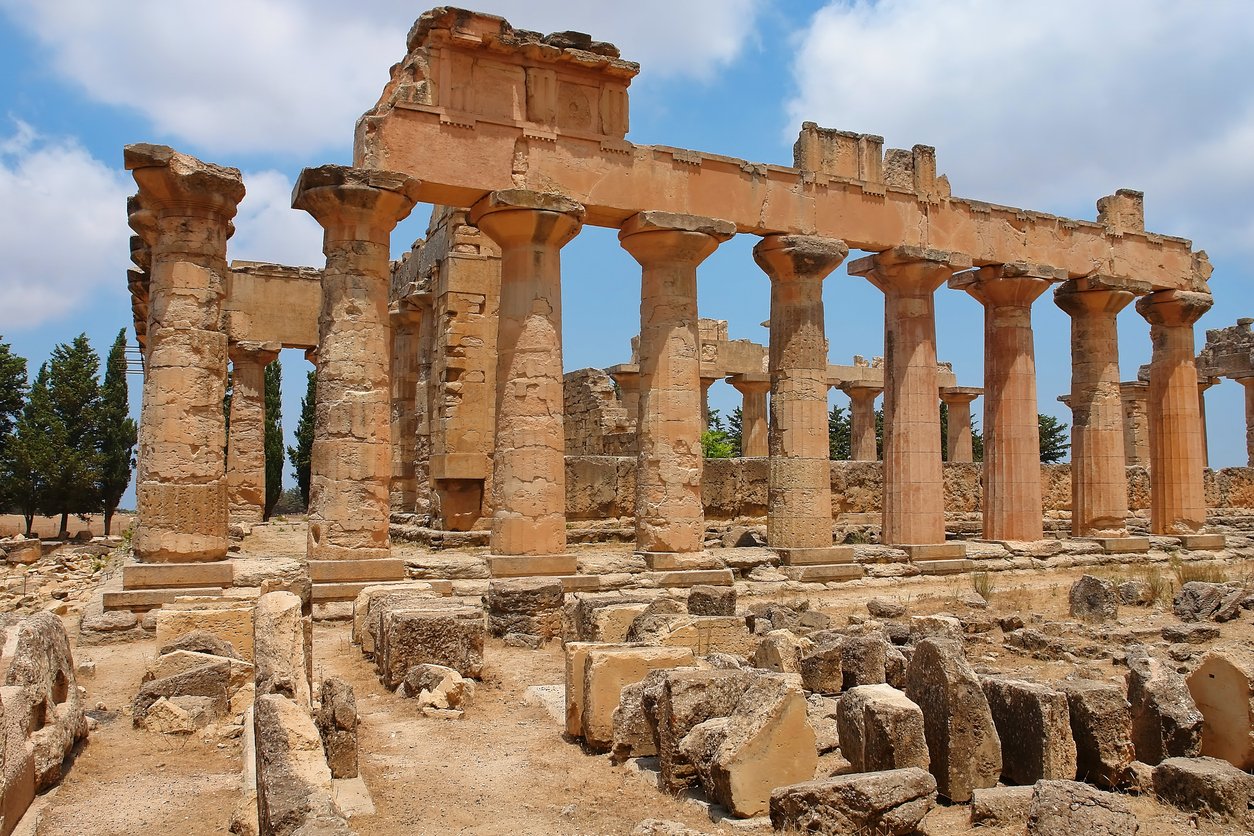
Ancient Port, Living Coast
Why Apollonia Libya is one of Cyrenaica’s essential archaeological sites
Apollonia Libya brings together archaeology and landscape in a way that feels immediately different from many inland ruins. Ancient walls, church columns, theater seating and harbor remains sit beside the Mediterranean, while the modern town of Susa continues life along the same coast.
The site is historically inseparable from Cyrene. UNESCO documentation describes Apollonia as Cyrene’s port for more than a thousand years, and a modern road of roughly 20 kilometers follows the corridor of the ancient route that connected city and harbor.
The relationship was practical: Cyrene occupied the high ground, while Apollonia provided maritime access to the Mediterranean.
That connection makes a combined visit especially rewarding. At Cyrene, the visitor experiences sanctuaries, monumental terraces and the urban landscape of an important Greek and Roman city.
At the coast, Apollonia Libya reveals the maritime infrastructure, churches and later administrative buildings that developed beside the sea.
City & Port
Apollonia Libya grew from Cyrene’s harbor into a major coastal city
The early history of Apollonia Libya is tied to Greek settlement in Cyrenaica and the need for a protected harbor. The site served as Cyrene’s maritime gateway for centuries, supporting trade, travel and defense across the Mediterranean.
Over time, the port developed beyond a dependent harbor. Apollonia became one of the principal cities associated with the Pentapolis of Cyrenaica and passed through Greek, Hellenistic, Roman and Byzantine phases.
Each period left a different architectural layer. During the Roman period, civic and residential buildings expanded. In Late Antiquity the city gained greater administrative importance.
Christian architecture became especially prominent. Basilicas rose in the city, older stone and columns were reused, and the Palace of the Dux reflected the role of regional administration.
Harbor development connected the coast with Cyrene and Mediterranean seafaring.
The city and harbor expanded within the wider network of Cyrenaica.
Public buildings, houses and the theater evolved with urban life.
Churches and administrative architecture became major features.
Maritime Archaeology
The submerged harbor is a defining part of Apollonia Libya
Part of what makes Apollonia Libya exceptional lies beneath the water. Archaeological studies have documented extensive submerged remains from the ancient harbor, including quays, breakwaters, entrance channels and other maritime structures.
Systematic underwater research has helped archaeologists understand how much of the early harbor landscape is now submerged and why the site is so valuable for the study of ancient maritime engineering.
Modern research emphasizes tectonic movement and changes in relative sea level as important factors in the changing coastline. It is therefore better to understand the submerged harbor as the result of a complex sequence of coastal changes rather than attributing everything to one single event.
The underwater archaeology preserves evidence from several historical phases and helps connect the visible ruins on land with the maritime city that once extended into the ancient harbor.
What can visitors see?
Some underwater remains may be visible from the coast or shallow water when conditions are clear, but access arrangements can change.
The important archaeological story is the relationship between the visible land ruins and the ancient port landscape extending toward the Mediterranean.
Sight 01 · Greek Theater
The Greek theater places ancient performance beside the sea
The theater is one of the best-known monuments of Apollonia Libya. Located near the eastern side of the ancient city, it was built during the Hellenistic period and later modified under Roman rule.
Its surviving seating descends toward the orchestra, while the Mediterranean now lies strikingly close. That relationship between ancient stone and open water creates one of the most memorable views at the archaeological site.
Roman alterations changed how parts of the building were used. Later, some architectural material from earlier structures was reused during the Christian period.
Today the theater also helps visitors understand how the coastline around Apollonia has changed since antiquity.
Sights 02–04 · Christian Apollonia
Three major basilicas reveal the Byzantine character of Apollonia Libya
The churches are central to understanding the later history of Apollonia Libya. The site is especially associated with the Eastern, Central and Western basilicas.
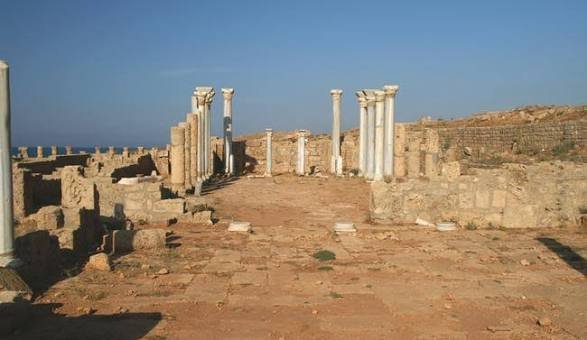
These buildings show how important Christianity became in the urban landscape of Late Antiquity. The Eastern Basilica is particularly memorable because of its columns and position close to the coast.
The Central Basilica preserves another part of the city’s Christian architecture, while the Western Basilica adds further evidence of the scale of religious building across the ancient settlement.
These structures are best understood as part of a changing city. Builders reused earlier materials, architectural elements moved between monuments, and Christian spaces were created within a city whose history already stretched back for centuries.
Sight 05 · Palace of the Dux
The Palace of the Dux reflects late Roman authority on the coast
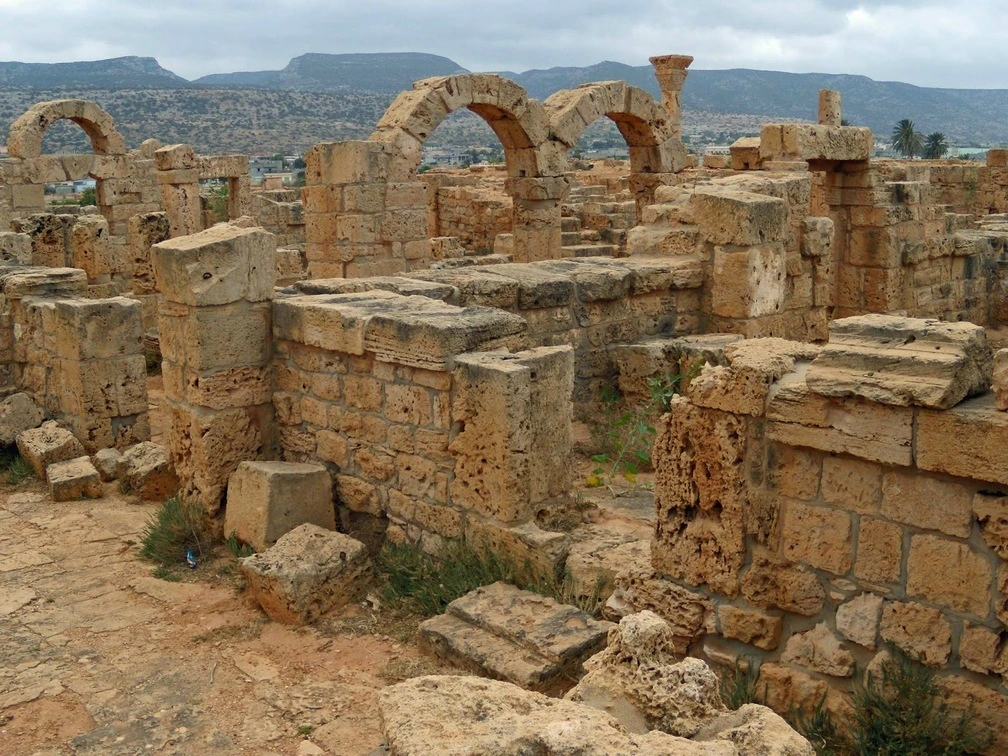
The Palace of the Dux is one of the strongest reminders that Apollonia Libya was more than a trading harbor. During Late Antiquity the city held administrative and military importance within eastern Libya.
Historical and archaeological descriptions associate the building with the regional military commander, the dux. The palace was arranged around a central court and included areas used for reception and administration.
Only part of the original structure survives, but its scale can still be understood through the gates, walls, arches and connected spaces.
Together with the churches and harbor, the palace helps visitors understand how Apollonia’s political role changed over time.
Sights 06–07 · Modern Coast
Modern Susa gives Apollonia Libya a living Mediterranean setting
The archaeological site is not isolated from modern life. Susa occupies the same coastal area, so a visit to Apollonia Libya naturally includes views of a contemporary eastern Libyan town beside the ancient ruins.
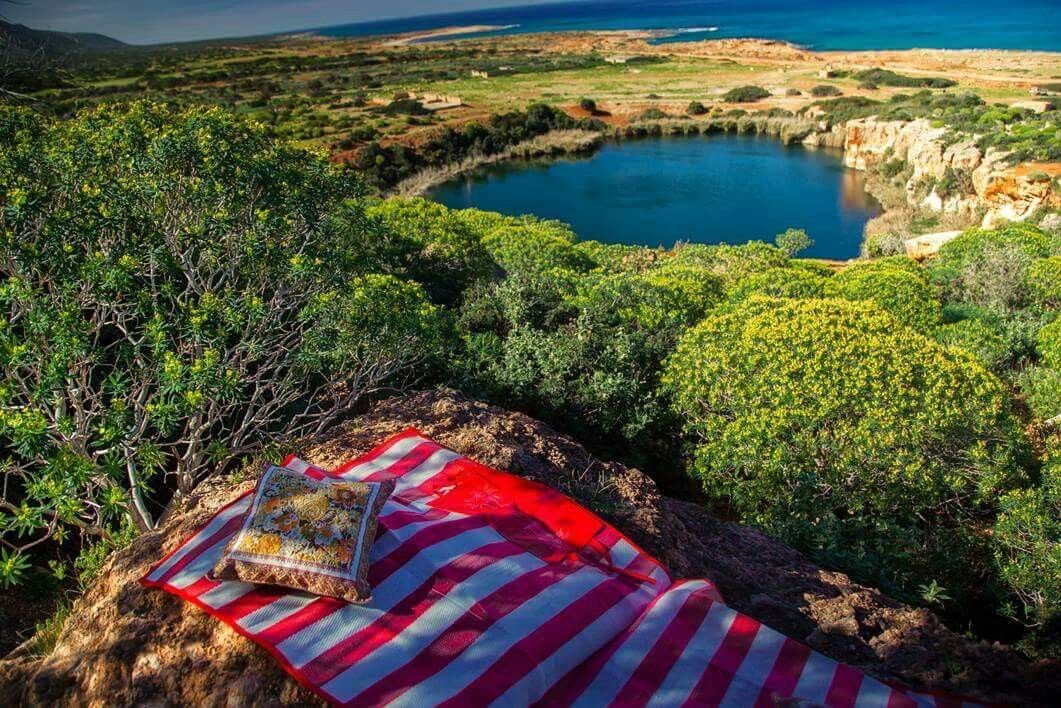
This creates a different feeling from a remote desert site. Fishing, roads, houses and the blue Mediterranean remain part of the surrounding landscape.
The ancient city belongs to a coast that is still inhabited and used. The modern name Susa also preserves a linguistic connection with names used for the city during Late Antiquity.
For travelers, using both names—Apollonia for the ancient city and Susa for the modern town—helps keep the archaeological and present-day settings clear.
Sight 08 · Archaeological Collections
The Susa museum adds context to Apollonia Libya
Museum collections associated with the site can add important context to a visit. Archaeological material such as ceramics, sculpture, architectural fragments and objects from daily life can help visitors understand the people who lived in the city.
A carved object or household item can reveal aspects of ancient life that monumental walls cannot.
When museum access is available, it can complement the outdoor visit to Apollonia Libya and help connect objects with the buildings and neighborhoods where they were discovered.
Individual museum and archaeological access may depend on local opening arrangements, so it is useful to confirm access for your travel dates.
Cyrenaica Route
Cyrene and Apollonia Libya belong together in one historical journey
The strongest way to understand Apollonia Libya is to visit it together with Cyrene. The ancient city and its harbor were historically connected by a road through the Green Mountain region.
The contrast is immediate. Cyrene rises on the plateau, while Apollonia sits at sea level facing the Mediterranean. One represents the inland urban and sacred center; the other reveals the maritime connection that supported trade and movement.
A well-paced eastern Libya itinerary can extend the route to Qasr Libya, Ptolemais and Benghazi. This creates a broader picture of Cyrenaica rather than reducing the region to one archaeological site.
Our Historical Libya Tour links Cyrene and Apollonia within a wider journey.
You can also explore our Benghazi guide and Places to Visit in Libya guide.
Gateway to the archaeology and landscapes of eastern Libya.
Major Greek and Roman city on the Green Mountain plateau.
Ancient port, theater, basilicas, palace and Mediterranean coast.
Planning the Visit
How to experience Apollonia Libya without rushing the site
Allow enough time to walk rather than treating Apollonia Libya as a quick photo stop after Cyrene. The archaeological landscape makes more sense when you move from the theater and churches toward the palace and coastline while keeping the ancient harbor in mind.
Morning or later afternoon light can make the Mediterranean setting particularly attractive for photography.
Comfortable walking shoes are useful because archaeological ground can be uneven, and sun protection is important even when sea breezes make temperatures feel mild.
For a history-focused day, combine Cyrene and Apollonia with a local guide who can explain the relationship between the two sites.
October through April is generally a comfortable period for long outdoor archaeological visits.
For broader transport planning, see Getting Around Libya .
The Ancient City & Port
Map: Apollonia Libya and Cyrene in eastern Libya
The map shows the geographical relationship between coastal Apollonia/Susa and inland Cyrene/Shahat, with Benghazi farther west.
Frequently Asked Questions
Apollonia Libya FAQ
Where is Apollonia Libya?
Was Apollonia the port of Cyrene?
What are the main sights at Apollonia Libya?
Why are some ruins underwater at Apollonia?
Is Apollonia a separate UNESCO World Heritage Site?
Can I visit Cyrene and Apollonia on the same route?
Is Susa the same place as Apollonia?
Research references: current specialist and institutional sources provide additional context for the ancient connection between Cyrene and Apollonia and for the archaeology of the Mediterranean harbor.
Libya Adventures · Since 2011
Planning a private archaeological journey through Cyrenaica?
Tell us your preferred dates and interests. Libya Adventures can help shape a private eastern Libya itinerary connecting Benghazi, Cyrene, Apollonia, Qasr Libya, Ptolemais and the Green Mountain region.
Request trip information →