
Dunes · Oasis Lakes · Rock Art · Desert Heritage
Top Things to Do in the Sahara Desert in Libya
Discover the Libyan Sahara through the dunes of Ubari, desert lakes, volcanic landscapes, prehistoric rock art, oasis towns, ancient Germa, camel trekking and nights beneath the desert sky.
The Libyan Sahara
More than dunes Southern Libya combines spectacular landscapes with oasis communities, archaeology and thousands of years of human history.A Sahara journey with many different landscapes
The Sahara is one of the defining landscapes of Libya, but describing it simply as an endless sea of sand misses much of what makes the south so interesting.
Around Ubari, immense dunes surround desert lakes. Farther south and west, rocky massifs and sandstone formations rise from the desert around Tadrart Acacus and Ghat. Germa preserves the story of the Garamantes, while Ghadames shows how communities developed a highly distinctive form of architecture for oasis life.
A desert itinerary can therefore combine landscape, archaeology, walking, camel-supported trekking, camping, photography and the cultural traditions of southern Libya.
Sahara highlights
10 unforgettable things to do in Libya’s Sahara
From giant dune fields and oasis lakes to prehistoric art and ancient desert settlements, these experiences reveal how varied the Libyan Sahara can be.
Cross the dunes of Ubari
Experience the vast Erg Ubari landscape where enormous golden dunes stretch across the Fezzan horizon.
Visit the desert lakes
See oasis lakes such as Gaberoun and Umm al-Maa surrounded by dunes and palms.
See Waw Al Namus
Discover the dramatic contrast of dark volcanic terrain, crater lakes and the surrounding Sahara.
Explore Tadrart Acacus
Travel through sandstone landscapes containing prehistoric rock paintings and engravings.
Discover Ghat
Explore one of southwestern Libya’s historic oasis communities at the gateway to Acacus.
Walk through old Ghadames
Discover covered streets, traditional houses and ingenious oasis architecture.
Explore ancient Germa
Learn about the Garamantes and one of the most important ancient centres of the Fezzan.
Join a camel-supported trek
Walk through the dunes while camels support the desert camp and carry equipment.
Camp beneath the desert sky
Spend the night away from city lights and experience the quiet rhythm of a Sahara camp.
Watch sunrise and sunset
Climb a dune or natural viewpoint as the light changes the colours of sand and rock.
Sahara route map
See the main highlights of the Libyan Sahara
The desert covers an enormous area. This map gives you a visual idea of how key destinations such as Ubari, Waw Al Namus, Ghadames and Tadrart Acacus fit into southern Libya.

Distances in the Sahara are large. A single itinerary normally focuses on a practical combination of regions rather than trying to visit every desert destination in one journey.
01 / Erg Ubari
Explore the Ubari Sand Sea
The Ubari Sand Sea is one of the most recognizable landscapes of southern Libya. Golden dunes rise and fall across the horizon, with oasis vegetation and desert lakes appearing unexpectedly between them.
The experience changes constantly with the light. Early morning produces softer colours and long shadows, while late afternoon can turn the dunes deep gold and orange.
Ubari is a natural setting for walking, photography, 4×4 journeys and camel-supported trekking rather than simply a viewpoint to visit for a few minutes.
Explore the Ubari Camel Trek →Oases among the dunes
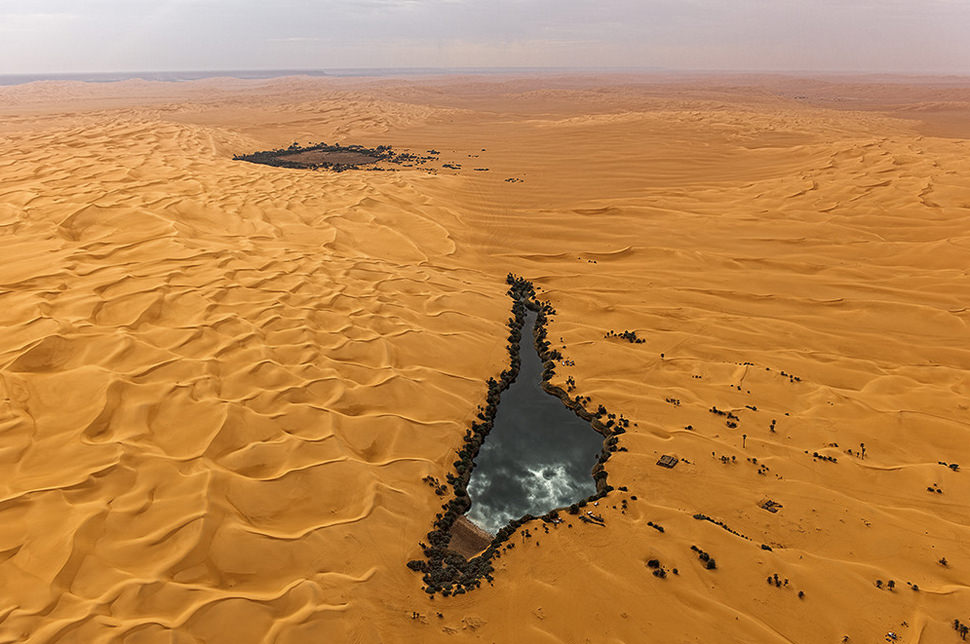
Visit the lakes of the Ubari Sand Sea
One of the most surprising features of the Ubari region is the presence of oasis lakes among enormous fields of sand.
Water, palms and steep dunes create a dramatic contrast that makes this area visually different from almost every other desert landscape in southern Libya.
The lakes are best treated as part of a wider desert journey. Each has its own setting and surrounding dune landscape.
One of the best-known lake settings of the Ubari region, framed by palms and high dunes.
Another distinctive oasis lake surrounded by the dune landscape of the Fezzan.
Climbing the surrounding sand offers a completely different perspective over the lakes and palms.

03 / Volcanic Sahara
See the extraordinary landscape of Waw Al Namus
Waw Al Namus offers a completely different image of the Sahara. Instead of only golden sand, the landscape is dominated by dark volcanic material surrounding a crater and lakes.
From above, the contrast between the black volcanic terrain, water and surrounding desert makes the site immediately recognizable.
Its remote setting is part of the experience. A visit needs to be planned as a dedicated desert journey rather than a quick stop between towns.
04 / Tadrart Acacus
Explore rock art and extraordinary sandstone landscapes
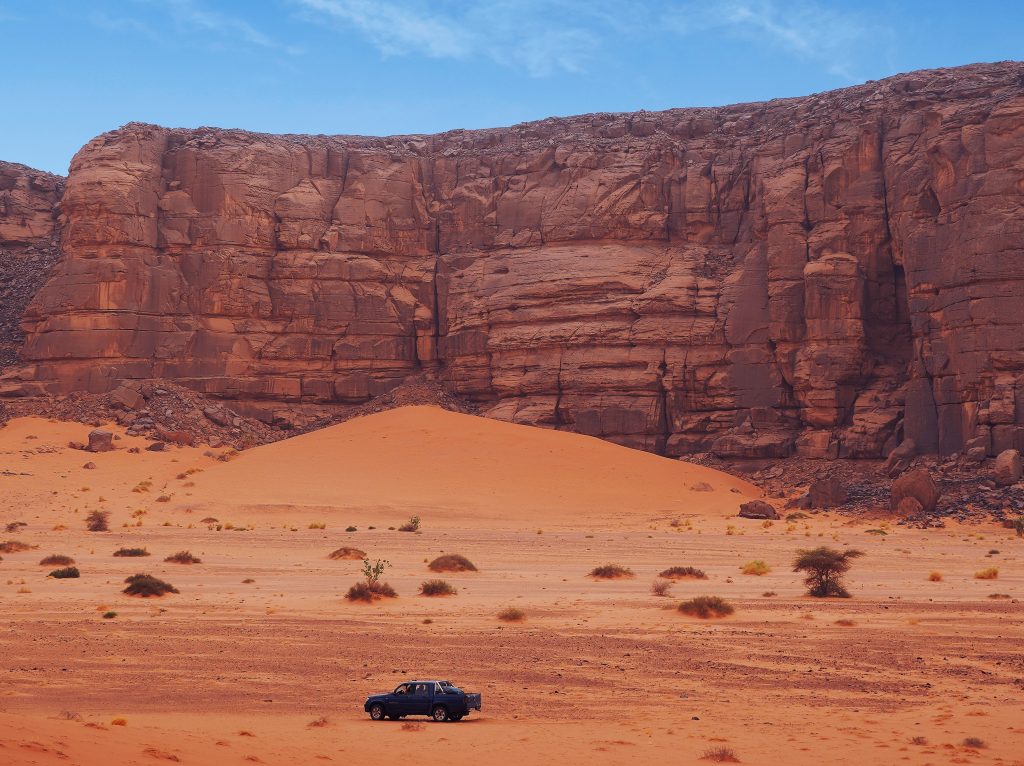
Tadrart Acacus is one of the great cultural landscapes of the Libyan Sahara. Natural arches, cliffs and eroded sandstone formations create a dramatic setting in the far southwest.
The area is especially important for its prehistoric paintings and engravings, which preserve evidence of human life and changing environments across long periods of Saharan history.
Acacus rewards travellers who look beyond the largest formations. Rock shelters, engravings, valleys and the changing light are all part of the experience.
Southwestern oasis
Discover Ghat
Ghat lies in southwestern Libya near the landscapes of Tadrart Acacus and has long been connected with Saharan routes and oasis life.
The town provides a cultural counterpoint to the surrounding wilderness. Traditional streets, oasis vegetation and the desert setting make it a natural base for understanding this part of Libya.
A journey combining Ghat with Acacus offers a good balance between cultural heritage and dramatic desert scenery.
06 / Oasis heritage
Old Town of Ghadames
One of Libya’s UNESCO World Heritage properties, Ghadames is known for its traditional architecture, covered streets and adaptation to desert life.
Walk through the old town of Ghadames
Ghadames is one of the most distinctive historic towns in the Sahara. Its traditional urban design was shaped by the need to create shade, privacy and comfort in a desert climate.
The old town is characterized by interconnected buildings, covered passageways and homes arranged around carefully organized interior spaces.
For travellers interested in architecture and desert culture, Ghadames offers a completely different experience from dune-based journeys around Ubari.
Explore Tripolitania & Ghadames →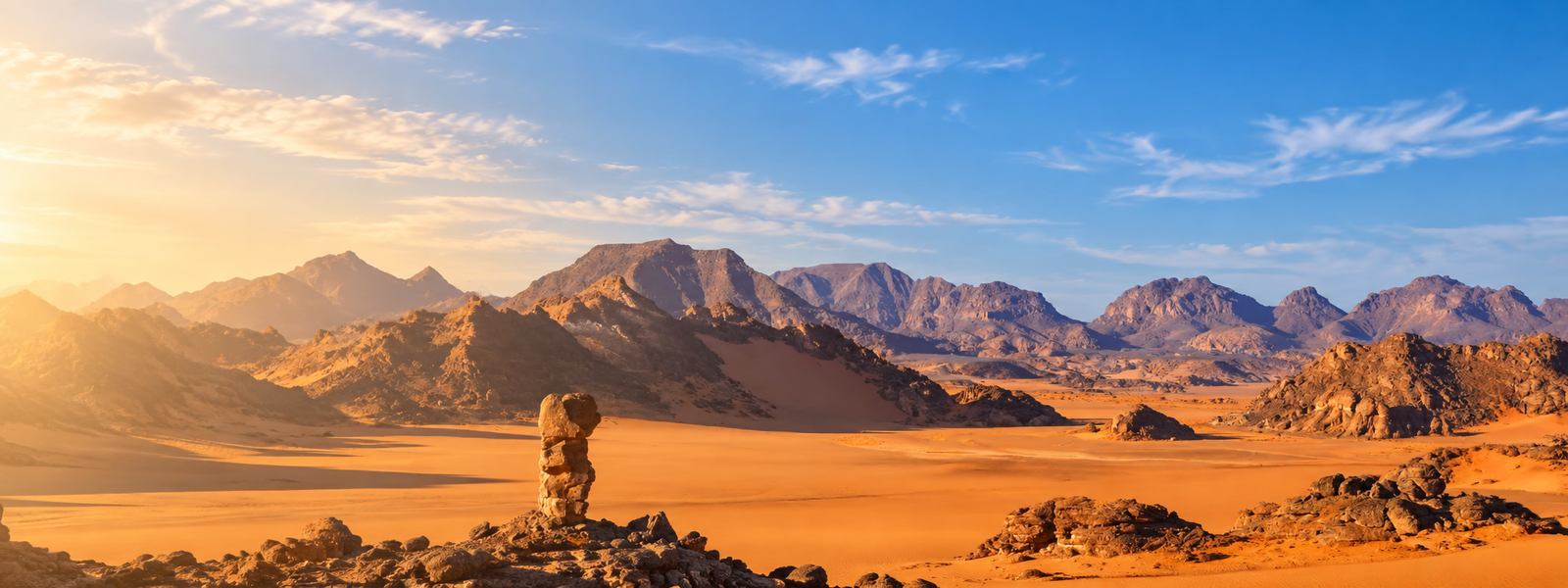
07 / Ancient Fezzan
Explore ancient Germa and the Garamantes
Germa, ancient Garama, was one of the principal centres of the Garamantes in the Fezzan.
Archaeological remains, nearby burial areas and traces of ancient water-management systems help reveal how communities lived and prospered in a landscape that can appear extremely demanding today.
Germa works especially well as part of an Ubari journey because it adds archaeology and history to the surrounding desert landscapes.
Read our Germa Guide →08 / Slow desert travel
Experience a camel-supported Sahara trek
One of the most memorable ways to experience the dunes is to travel at walking pace. On our Ubari Camel Trek, camels support the journey by carrying camp equipment while travellers walk through the desert landscape.
The slower rhythm creates more time to notice the shape of the dunes, changing light, tracks in the sand and the silence of the desert.
09 / Desert nights
Camp beneath the Sahara sky
Some of the best moments in the desert happen after the driving and walking stop for the day.
Watch the colour of the dunes change as the sun drops toward the horizon.
Evening camp becomes a place for food, conversation and rest after a day outdoors.
Away from large cities, the dark desert sky becomes one of the most memorable parts of the journey.
Early morning light can transform the same landscape you saw the evening before.
Planning your desert journey
Best time and what to bring
Conditions vary by region and season, but cooler months are generally more comfortable for extended Sahara travel. Our current Ubari Camel Trek is planned from October to April.
Loose clothing provides useful sun protection during long periods outdoors.
Desert nights and early mornings can feel considerably cooler than daytime.
Bring sunglasses, sunscreen and a hat or suitable head covering.
Choose shoes suitable for sand, uneven ground and extended walking.
Bring enough of your normal medication for the full remote section of the journey.
Charging opportunities can be limited during remote sections, so arrive prepared.
Libya Adventures
Sahara journeys and Libya itineraries
Choose a desert-focused journey or combine the Sahara with Libya’s historic cities and archaeological sites.
Ubari Camel Trek – 8 Days
Camel-supported walking, desert camps, Erg Ubari dunes and the landscapes of southern Libya.
View itinerary →Tripolitania & Ghadames – 7 Days
Combine Roman heritage in northern Libya with the historic oasis town of Ghadames.
View itinerary →Historical Libya – 9 Days
A broader journey through major historic and cultural destinations across Libya.
View itinerary →Roman Archaeological – 4 Days
A focused journey through Tripoli, Leptis Magna and Sabratha.
View itinerary →Frequently asked questions
Libyan Sahara FAQ
What are the best things to do in the Sahara Desert in Libya?
Where are the desert lakes in Libya?
What is Waw Al Namus?
What is special about Tadrart Acacus?
Is Ghadames part of the Sahara?
What is Germa known for?
What is the best time for an Ubari desert journey?
Does Libya Adventures arrange Sahara tours?
Continue planning
More Libya travel guides
Dreaming of the Sahara?
Plan your Libya desert journey
Tell us your preferred travel dates, number of travellers and the places you would like to see. We can discuss a private Sahara itinerary or combine the desert with other destinations across Libya.
Send an Enquiry →