
Libya Cultural Journeys · Jabal Nafusa
Gharyan Libya: Underground Homes, Pottery & Mountain Heritage
South of Tripoli, Gharyan introduces travelers to another side of western Libya: traditional underground architecture, local pottery and a mountain landscape that contrasts with the Mediterranean capital.
Why visit Gharyan?
Gharyan is one of the most interesting cultural stops in western Libya. Traveling south from Tripoli moves visitors away from the Mediterranean coast and into a higher landscape with its own architectural and craft traditions.
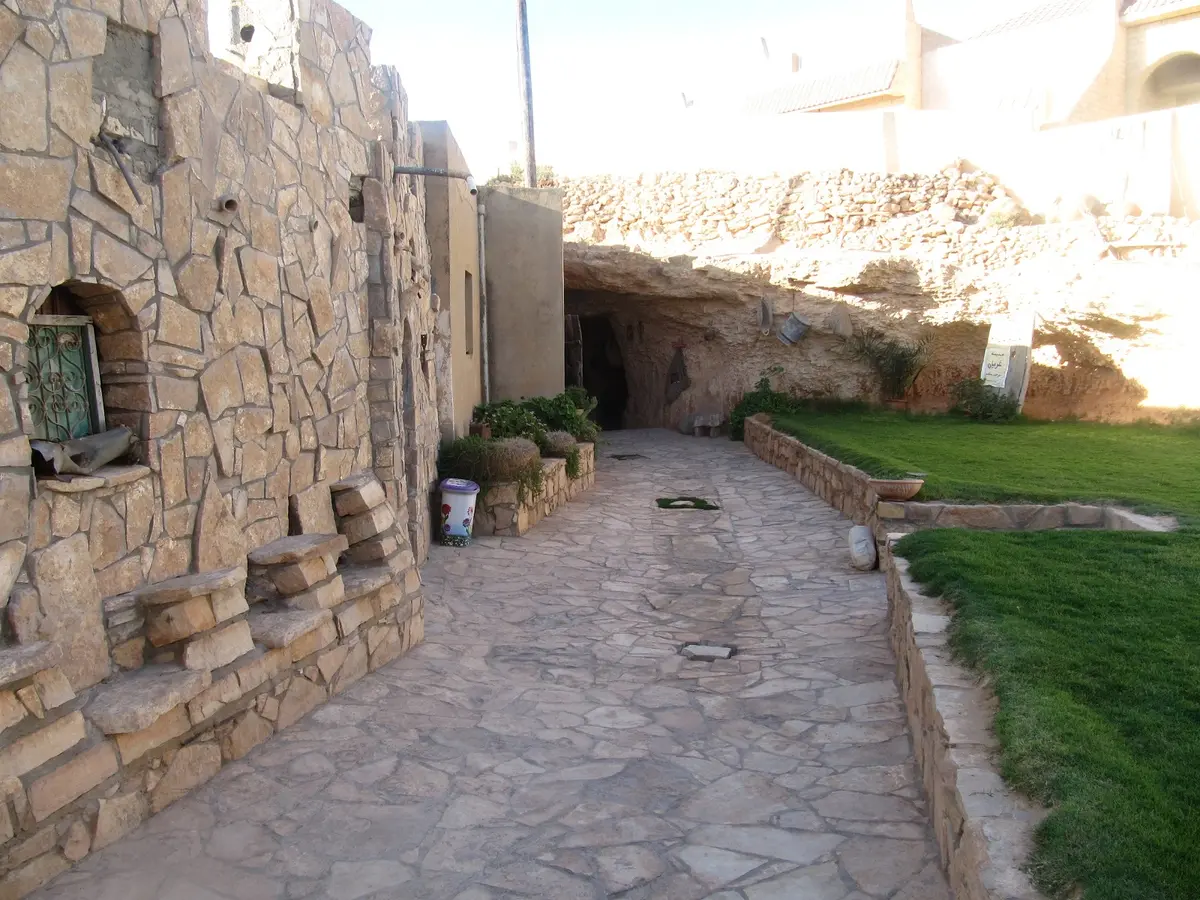
The city’s best-known heritage is its underground housing. Often associated with the terms damous and Housh al-Hafr, these homes were created by excavating below ground level rather than constructing every room above the landscape.
A central courtyard formed the heart of the house, with rooms extending into the earth around it. The design provided privacy, shelter and a natural way of moderating indoor temperatures.
Gharyan is also strongly connected with pottery. Traditional jars, bowls, cooking vessels and ceramics make the city a particularly interesting stop for travelers who enjoy living crafts as much as historical architecture.
Together, the underground homes and pottery offer something different from Libya’s Roman cities or Saharan archaeological sites. Gharyan tells a more intimate story about domestic life, local materials and adaptation to the environment.
Tripoli to Gharyan
From the Mediterranean coast to the western highlands
Gharyan lies south of Tripoli. A day journey from the capital adds a change of landscape as the route moves inland toward western Libya’s higher terrain.
Housh al-Hafr · Damous
Inside Gharyan’s underground homes
The underground house is Gharyan’s most distinctive architectural experience. Its form shows how local builders used the earth itself as part of the structure.
Traditional domestic architecture
Rooms created beneath the surface
A traditional Gharyan underground house was built through excavation. Builders created a sunken central courtyard and then extended rooms horizontally into the surrounding earth and rock.
The courtyard brought daylight and air to the center of the home, while the rooms remained protected by the mass of the surrounding ground.
Access was provided through an entrance passage connecting the lower courtyard with ground level. The gradual transition from the outside landscape to the interior is one of the most memorable parts of seeing the architecture in person.
Earth surrounding the rooms also acted as natural insulation. Rather than responding to temperature only through mechanical systems, the architecture used the physical properties of the landscape itself.
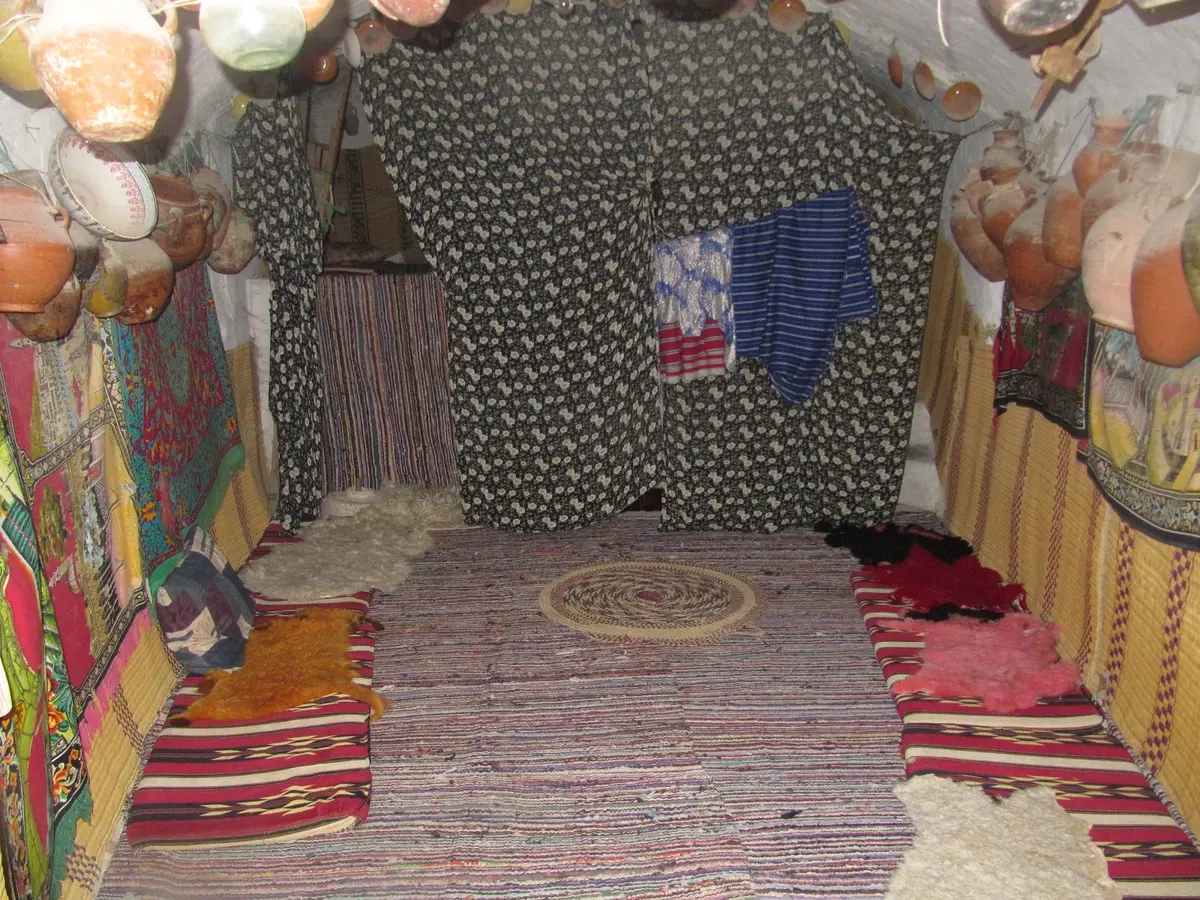
Interiors could be furnished with rugs, cushions, pottery and household objects, turning carved rooms into practical family spaces rather than simply shelters.
The center of the home
The open courtyard allows daylight and air to enter spaces that sit below ground level.
Carved outward
Rooms extend horizontally around the courtyard into the surrounding earth.
A gradual descent
An access passage connects ground level with the protected domestic space below.
Natural insulation
The surrounding earth helps moderate temperature changes inside the house.
Living craftsmanship
Gharyan’s pottery tradition
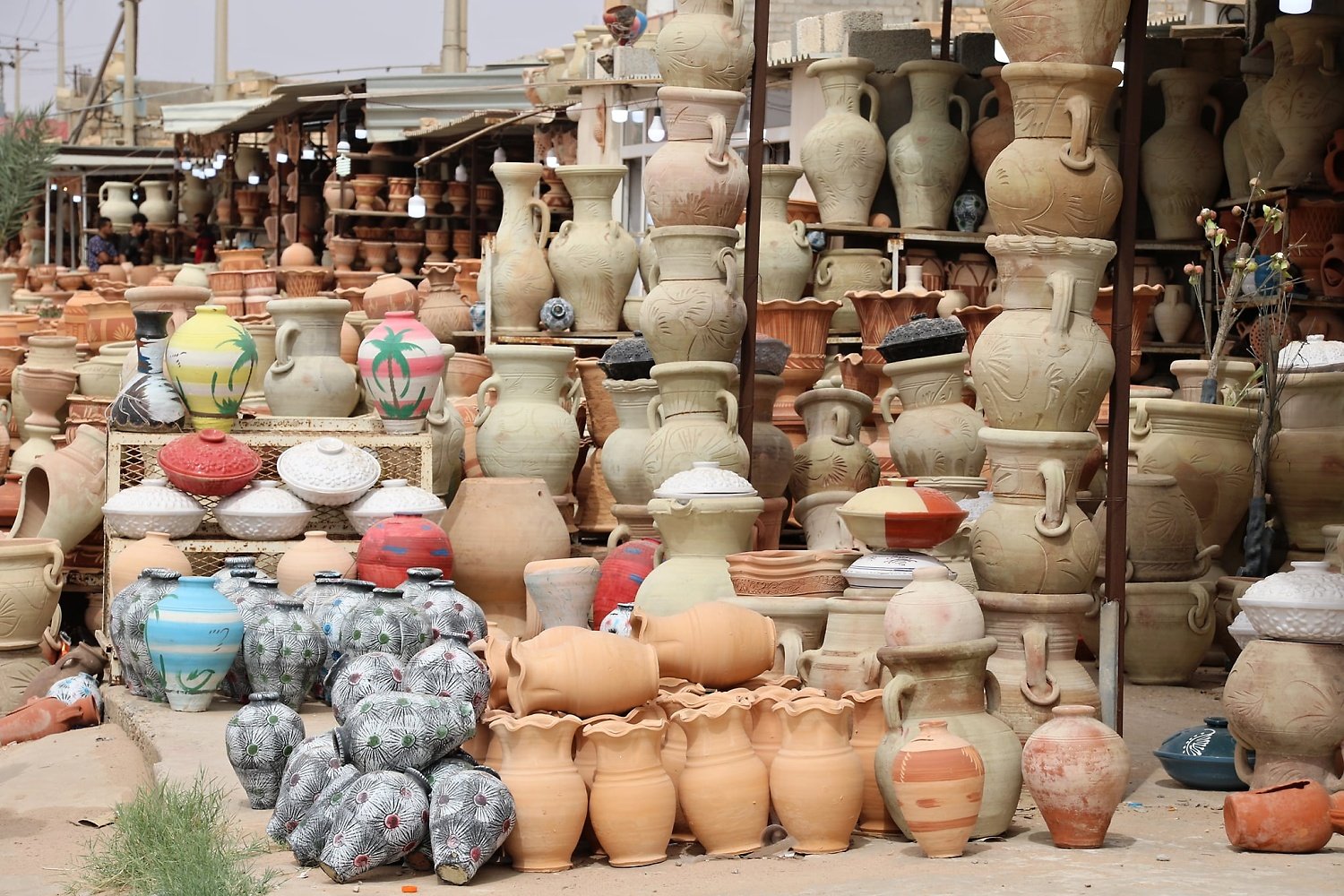
Gharyan is widely associated with traditional pottery and ceramics. Local displays can include tall water jars, storage vessels, bowls, cooking pieces and decorative ceramics in a wide range of forms.
The variety is part of what makes a pottery stop interesting. Some pieces are primarily practical, while others are shaped or decorated for display. Together they show how one craft can connect household life, local identity and artistic skill.
Pottery is especially valuable in a cultural itinerary because it represents living knowledge. Unlike archaeological objects that belong entirely to the past, ceramics can still be formed, decorated, sold and used today.
A visit also gives travelers an opportunity to see the colors and forms associated with local markets and workshops. Larger storage jars create an impressive visual display, while smaller household pieces can make practical souvenirs.
Libya’s Ministry of Tourism and Traditional Industries identifies Gharyan as an important center for traditional pottery production.
Clay in everyday life
From cooking vessels to decorative ceramics
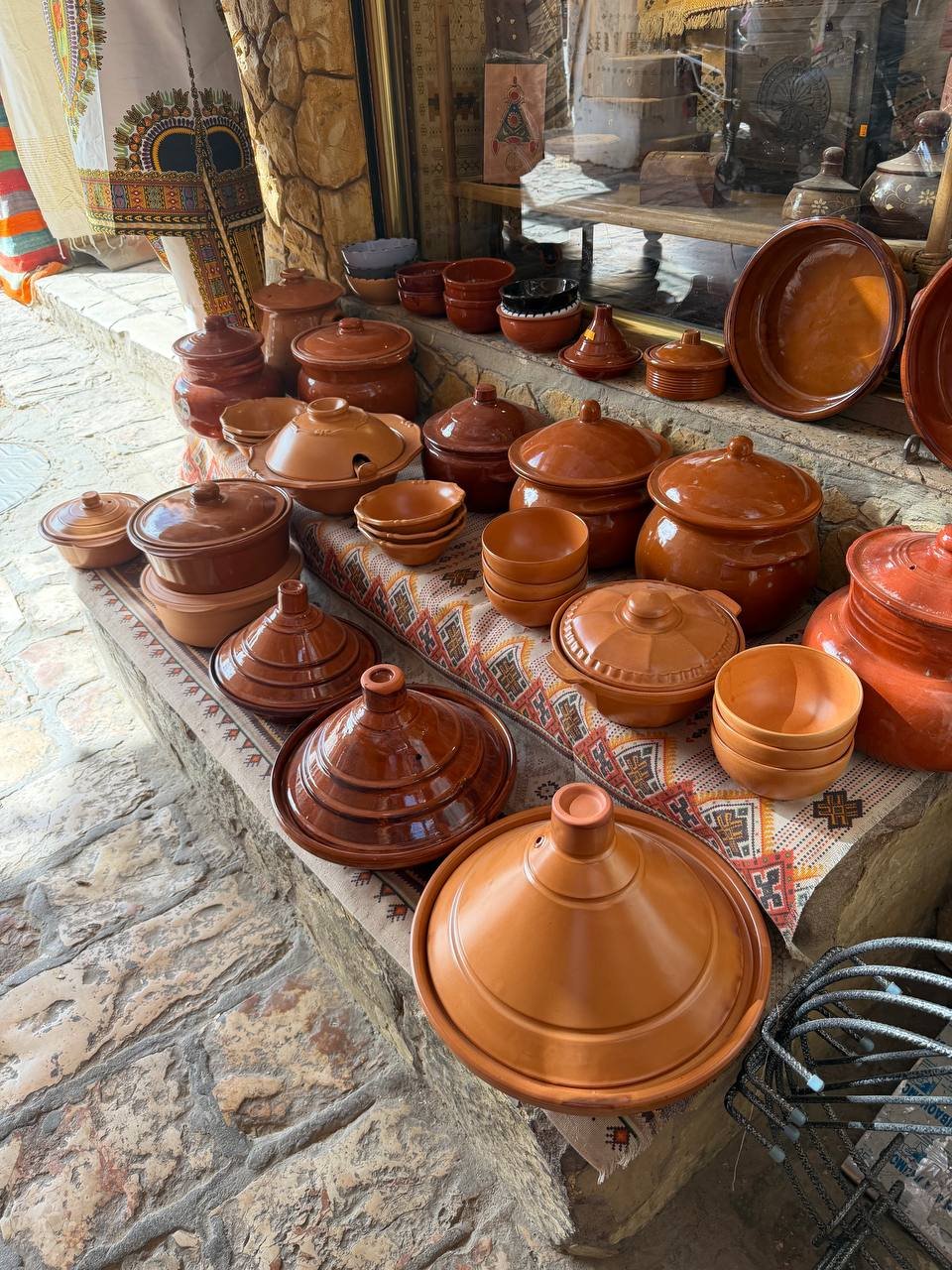
Gharyan’s ceramic tradition includes more than the large jars often seen beside roads and pottery shops. Covered cooking dishes, serving vessels, bowls and glazed household pieces show the practical side of the craft.
Warm shades of terracotta and brown are especially striking when combined with simple glazed finishes. The result is pottery that feels connected to both traditional cooking and contemporary home use.
For visitors who enjoy shopping for locally connected souvenirs, pottery can be a strong choice because it carries a clear relationship with Gharyan’s craft identity.
Fragile pieces need thoughtful packing, so travelers planning a longer journey should consider size and protection before selecting larger ceramic items.
Western highlands
The landscape helps explain Gharyan
Gharyan’s heritage becomes easier to understand when viewed together with its location. The city lies inland from Tripoli in the higher terrain of western Libya.
Traveling from the coast provides a visible transition from the Mediterranean environment of the capital to a landscape shaped by elevation, rock and mountain settlements.
Traditional underground architecture developed within this environment. Building into the land provided shelter and temperature stability while making use of materials already present in the landscape.
This relationship between geography and architecture is one reason Gharyan deserves more than a quick photography stop. The houses, crafts and setting work together as one cultural experience.
Sample experience
A cultural day from Tripoli to Gharyan
Exact arrangements vary, but a private day in Gharyan can bring together the mountain journey, underground architecture and traditional pottery while returning to Tripoli for the night.
Leave the capital and travel south from the Mediterranean coast toward western Libya’s higher interior.
Begin by understanding the city’s relationship with the mountain landscape before exploring the architecture.
See how rooms, a central courtyard and entrance passage create a domestic space below ground level.
Discover the jars, cooking vessels and ceramics associated with one of Libya’s best-known pottery centers.
Finish the cultural excursion and return to the capital without needing to change accommodation.
Travel with Libya Adventures
Gharyan in our Historical Libya journey
Gharyan is already included in our Historical Libya itinerary, where it adds mountain heritage and traditional architecture to a journey that also explores Libya’s major cultural sites.
Day three travels south from Tripoli to Gharyan and returns to the capital after the visit. It adds a valuable contrast to the archaeological sites and urban experiences found elsewhere in the itinerary.
Before you go
Practical tips for visiting Gharyan
Comfortable shoes
Underground houses can include steps, slopes and uneven stone surfaces.
Ask permission
Ask before photographing residents, craftspeople or shopkeepers at close range.
Respect the homes
Treat traditional houses as cultural spaces and avoid touching or climbing on fragile areas.
Pack carefully
If you buy ceramic pieces, choose a size that can be protected safely throughout the rest of your journey.
Avoid rushing
The city is more rewarding when both architecture and craftsmanship are given enough time.
Confirm arrangements
Individual homes and pottery stops can depend on the day’s confirmed local arrangements.
Frequently asked questions
Gharyan Libya FAQ
Where is Gharyan in Libya?
How far is Gharyan from Tripoli?
What is Gharyan famous for?
What is a Housh al-Hafr?
Why were Gharyan homes built underground?
Is Gharyan known for pottery?
Can Gharyan be visited as a day trip from Tripoli?
Can Libya Adventures arrange a private Gharyan visit?
Continue exploring
More Libya travel ideas
Explore western Libya
Add Gharyan to your private Libya journey
Tell us your preferred dates, number of travelers and the destinations you want to explore. We can discuss combining Tripoli, Gharyan and other cultural, archaeological or desert destinations in one private itinerary.
Send an Enquiry →