

Libya Heritage Guide · UNESCO World Heritage
Sabratha Libya: Roman Theatre, UNESCO Ruins & Ancient Coastal History
On Libya’s Mediterranean coast, Sabratha offers one of the most memorable archaeological experiences in North Africa. The site is admired for its extraordinary Roman theatre, but the story of Sabratha is much richer than one monument alone. This ancient city began as a Phoenician trading post, later developed under Punic and Roman influence, and today reveals a layered landscape of temples, baths, forum spaces, basilicas, houses and sea-facing ruins that still communicate the scale of its former importance.
Why visit the Roman site of Sabratha?
Sabratha is one of those destinations that immediately feels significant when you arrive. The location alone tells part of the story: an ancient city on the coast, close to the sea lanes that connected North Africa with the wider Mediterranean world. Long before the monumental Roman buildings appeared, Sabratha functioned as a trading post that linked products from the African interior with maritime exchange networks.
What makes the site so rewarding today is the way the ruins remain legible. You do not see a single isolated monument surrounded by emptiness. Instead, you encounter the remains of an urban world: a forum, temples, baths, houses, basilicas, roads, port-related infrastructure and a theatre whose scale still dominates the site. Even for travelers who are not specialists in archaeology, the city plan makes sense on the ground.
Sabratha also works beautifully within a broader Libya itinerary. If Leptis Magna demonstrates the grandeur of one major Roman city in Tripolitania, Sabratha offers a different coastal atmosphere and a distinct visual identity. The theatre, the open skyline, the sea-facing setting and the mix of Punic, Roman and early Christian layers make it a destination worth understanding in its own right.
For photographers, history enthusiasts and first-time visitors to Libya, Sabratha is often one of the most memorable sites because of this balance between beauty and clarity. The monuments are impressive, but they are also approachable. You can walk through them, imagine how different spaces related to one another, and appreciate how a Mediterranean port city once functioned at a high level of prosperity.
Historical timeline
From Phoenician trading post to Roman city and UNESCO site
Sabratha’s importance developed over many centuries. Its story begins with maritime trade, expands under Roman rule and continues through late antique and Byzantine phases before the city gradually declined and was eventually rediscovered by archaeology.
Trade on the western Libyan coast
Sabratha began as a Phoenician trading post and later developed under Punic influence. Its position on the Mediterranean coast gave it strategic value as an outlet for goods moving between the African interior and maritime markets. This early foundation explains why Sabratha grew in importance long before the Roman monumental phase.
Urban expansion in the 2nd and 3rd centuries
Under Roman rule, Sabratha was rebuilt and greatly expanded. Major public monuments appeared, older structures were renewed, and the city acquired the urban character still visible today. The forum area, temples, baths and theatre all belong to this story of prosperity and Romanization.
Resilience, decline and renewed activity
Earthquakes and political change affected the city, but Sabratha was not instantly abandoned. It entered Christian and Byzantine phases, with churches and later activity showing that the site continued to matter even after its classical peak had passed.
Archaeology brought Sabratha back into view
Excavations in the twentieth century helped reveal the scale of the ancient city. Today the remains of Sabratha are among the clearest and most impressive examples of Roman urban planning and architecture on the North African coast, while also preserving evidence of its deeper Phoenician and Punic origins.
Where is Sabratha?
On Libya’s Mediterranean coast, west of Tripoli
Sabratha lies on the northwestern coast of Libya and is commonly visited from Tripoli. Its position by the sea is essential to understanding the site, because trade, harbour activity and coastal visibility all shaped the city’s development.
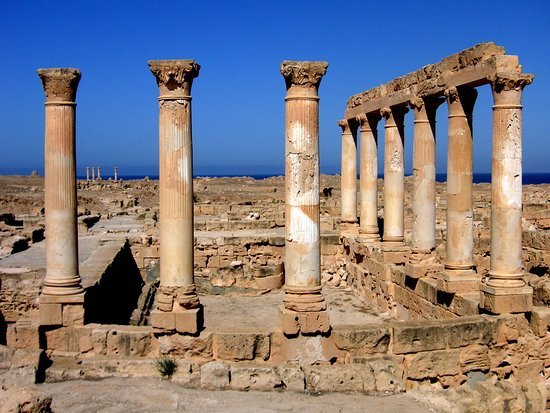
The site’s most celebrated monument
The Roman theatre of Sabratha
The Roman theatre is the image most travelers associate with Sabratha, and for good reason. Its reconstructed architectural backdrop, vertical rhythm of columns and commanding position within the site create an unforgettable first impression. Even when someone arrives knowing little about ancient Libya, the theatre communicates grandeur immediately.
Yet the theatre is more than a beautiful structure. It helps explain the confidence and prosperity of Roman Sabratha. Public architecture of this scale did not appear accidentally. It belonged to a city that had resources, connections and civic ambition. The theatre expresses an urban culture in which public performance, display and monumental design played central roles.
Walking through the theatre also gives visitors one of the clearest spatial experiences in the whole site. You can observe the relationship between seating, stage architecture and the wider city around it. The monument is both decorative and practical: an artistic statement and a public venue.
Because it is so photogenic, some visitors focus only on the theatre and move on too quickly. That would be a mistake. The theatre is the highlight, but it is strongest when understood as one part of a larger urban story involving religion, commerce, bathing culture, civic life and domestic spaces.
What to see at the site
Forum, temples, baths, houses and sea-facing ruins
Sabratha rewards slow exploration. Beyond the theatre, the city includes a wide range of monuments that reveal how religion, politics, urban organization and daily life were woven together.
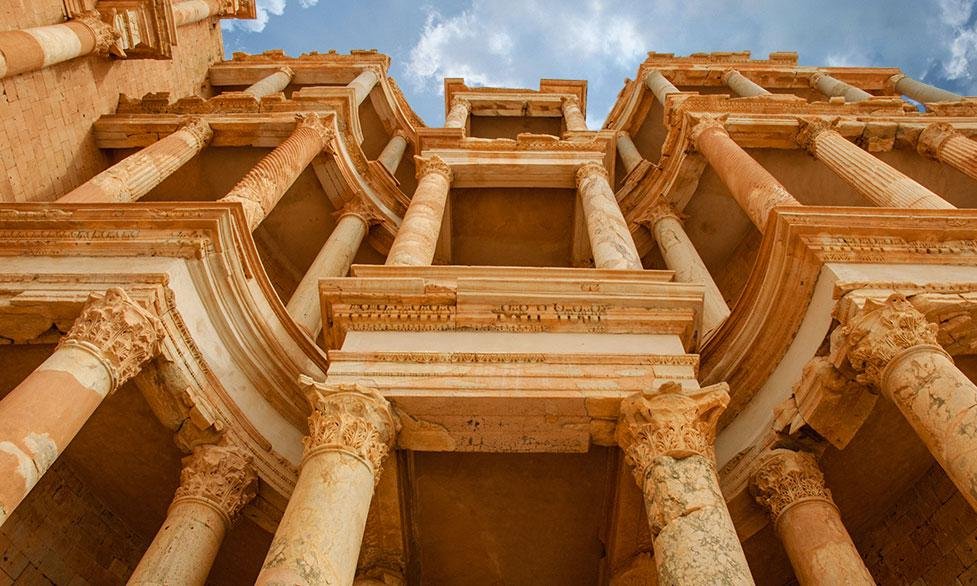
The heart of public life
The forum area helps visitors understand Sabratha as a functioning city rather than only a collection of ruins. This was the civic center where public life was concentrated, close to important religious and administrative structures. Walking the area allows you to imagine movement through an ordered urban environment.
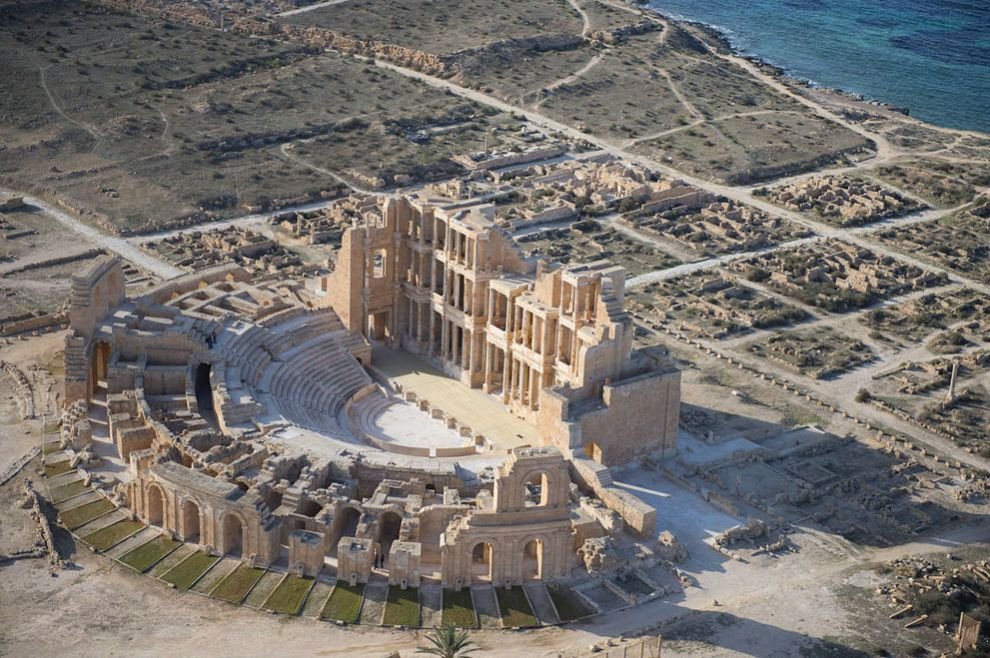
A city of multiple sacred spaces
Sabratha contains temples associated with major cults including Liber Pater, Serapis and Isis. These monuments show how religion was physically embedded in the city’s plan and how Sabratha participated in the wider cultural world of the Roman Mediterranean.
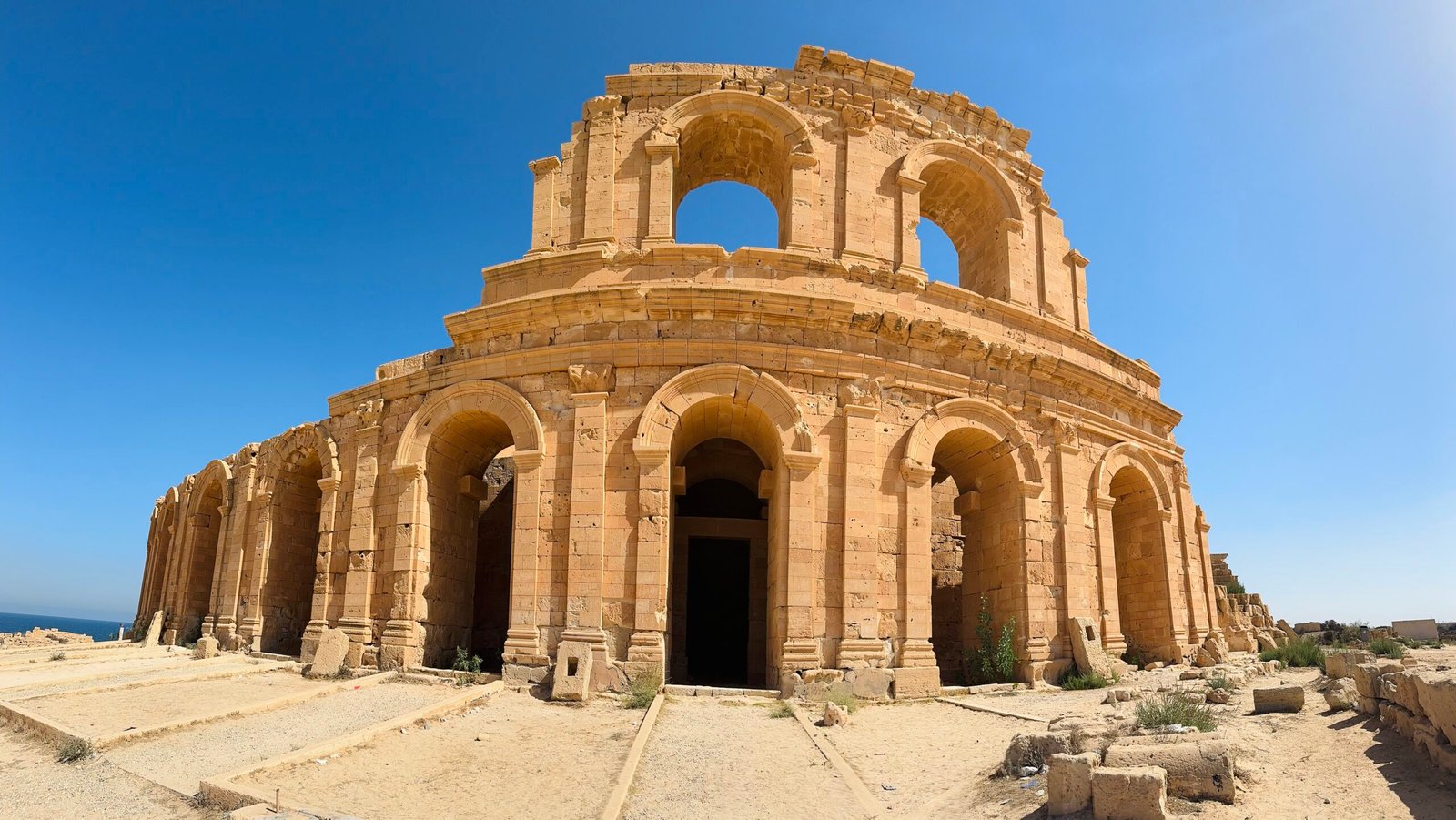
Ruins beside the Mediterranean
One of Sabratha’s most attractive qualities is its coastal setting. The sea is never far from the visitor’s imagination. It reinforces the city’s historical role in trade and gives the archaeological experience an openness and light that distinguishes Sabratha from inland ruins.
The baths and urban comfort
Roman baths in Sabratha remind visitors that ancient cities were not only political and religious spaces; they were also social environments organized around comfort, routine and public encounter. Baths were places of washing, relaxation and interaction. Their position and remains help complete the picture of a city designed for a sophisticated urban lifestyle.
Standing among these structures, it becomes easier to imagine how architecture supported daily rhythms. Sabratha was a city where trade brought wealth, and wealth helped shape a public environment of impressive quality.
Houses, mosaics and lived experience
Domestic remains are essential because they bring the story down to a human scale. Houses and decorative elements such as mosaics reveal that Sabratha was not only monumental but also inhabited in refined and organized ways. They show the city as a lived space where families, traders, officials and craftspeople all participated in urban life.
For many visitors, these quieter remains become some of the most interesting parts of the site because they connect historical grandeur with everyday experience.
A city open to the sea
Sabratha’s Mediterranean setting is part of the experience
The beauty of Sabratha is not limited to carved stone or monumental architecture. The site’s coastal light and open horizon are part of what makes it special. Unlike an archaeological city buried deep inland, Sabratha feels connected to movement, trade and horizon lines.
This atmosphere matters because it helps visitors understand why the city emerged here in the first place. A harbour, sheltered access and a strategic position on maritime routes made this coastline valuable long before the Roman period. The geography and the archaeology belong together.
For that reason, Sabratha is often one of the most visually balanced heritage sites in Libya: monumental but not overwhelming, historical but not abstract, and archaeological while still closely tied to the natural setting around it.
Why UNESCO recognition matters for Sabratha
UNESCO status is not only a label; it helps explain what makes Sabratha globally important. The site is valued because it preserves a remarkably coherent urban and monumental landscape, while also documenting a long historical sequence from Phoenician beginnings through Punic, Roman and early Christian phases.
In simple terms, Sabratha matters because it is both beautiful and informative. It offers a clear example of Roman urban planning on the North African coast, but it also shows how earlier local and regional histories were absorbed into later imperial forms. This layered identity is one of the reasons Sabratha feels intellectually rich even to visitors who spend only a few hours there.
UNESCO recognition also highlights conservation value. Visiting Sabratha reminds travelers that Libya’s heritage is not marginal or secondary within Mediterranean history. Sites like Sabratha belong to the central story of exchange, architecture and civilization across the ancient world.
For Libya Adventures, this is exactly why Sabratha deserves careful interpretation rather than a brief stop. It is one of the country’s defining cultural places and should be approached as a major destination, not just a short excursion.
Planning your visit
Useful travel tips for visiting Sabratha
Sabratha is enjoyable for both first-time travelers and experienced archaeology enthusiasts. A few simple practical choices can make the visit more comfortable and more rewarding.
Give yourself enough time
Sabratha deserves more than a quick photo stop. The theatre is impressive, but the site becomes more meaningful when you also explore the forum, temples, baths and houses at a relaxed pace.
Wear stable shoes
Archaeological sites involve uneven stone surfaces, open ground and longer walks. Comfortable shoes make a significant difference.
Prepare for open exposure
The site is open and coastal, so sunlight can be strong. Water, sun protection and a light hat are practical choices for much of the year.
Bring a wide perspective
Sabratha photographs beautifully because of its scale and the coastal horizon. Wide views are especially rewarding in the theatre and open urban areas.
Visit with a guide if possible
The remains become much more meaningful when you understand what different buildings were used for and how the city developed over time.
Combine with western Libya
Sabratha works very well with Tripoli and other western Libya experiences, especially within heritage-focused itineraries.
Travel with Libya Adventures
How Sabratha fits into our Libya itineraries
Sabratha is one of the most natural archaeological destinations to include in a western Libya journey. It works especially well for travelers who want Roman heritage, UNESCO sites and historical context without losing the beauty of the coastline.
Sabratha pairs naturally with our Roman and heritage-focused programs. It can be explored as part of the Roman Archaeological – 4 Days, the Historical Libya – 9 Days, or a tailor-made western Libya itinerary that also includes Tripoli and other cultural highlights.
Why Sabratha is a strong private-tour choice
Some travelers are mainly interested in Roman archaeology. Others want a more balanced introduction to Libya with cities, landscapes and heritage sites. Sabratha suits both profiles because it is visually impressive, historically important and logistically practical from Tripoli.
It also works well for guests who want an accessible archaeological experience without needing advanced background knowledge. The site speaks clearly for itself, especially when combined with good guiding.
Suggested combinations
If your interest is primarily in classical heritage, Sabratha pairs naturally with Leptis Magna and the museum experience in Tripoli. If your interests are broader, it can also be combined with cultural city visits, the old medina of Tripoli, or a longer historical route through western Libya.
We can adapt the pace, depth and combination of destinations depending on how much time you have and what kind of journey you want.
Frequently asked questions
Sabratha Libya FAQ
Where is Sabratha in Libya?
What is Sabratha famous for?
Is Sabratha a UNESCO World Heritage Site?
Was Sabratha originally Roman?
Can I visit Sabratha from Tripoli?
What should I see besides the theatre?
Is Sabratha worth visiting if I am not an archaeology specialist?
Can Libya Adventures arrange a private Sabratha visit?
Continue exploring
More Libya travel ideas
Plan your heritage journey
Would you like to visit Sabratha with Libya Adventures?
Tell us your travel dates, group size and the destinations that interest you most. We can help you build a private Libya itinerary that includes Sabratha, Tripoli and other major historical or cultural highlights.
Send an Enquiry →