
Libya Travel Planning · Transport Guide 2026
Getting Around Libya: Transport, Domestic Flights & Road Travel
Getting Around Libya is mainly about choosing the right combination of private road transport, domestic flights and locally arranged transfers. Distances are large, the best option changes by route, and desert journeys need different planning from travel around Tripoli or the Roman sites. This guide explains the practical choices for visitors, from airport transfers and taxis to long-distance road trips, flights and 4×4 travel in the Sahara.
Getting Around Libya in 2026
Getting Around Libya between cities and sights
Getting Around Libya becomes much easier once the country is divided into three travel environments: cities, intercity routes and the desert. Within Tripoli and other major cities, visitors can use local taxis, arranged drivers and hotel or airport transfers. Between nearby heritage destinations, private road transport is often the most practical choice. For much longer distances, domestic flights can save substantial travel time when the required route is operating.
Libya’s geography explains why planning matters. The Mediterranean coast stretches across a large distance, while many desert destinations lie far to the south. Tripoli, Benghazi and Sabha are not simply neighboring stops that can be joined casually in one day. A good itinerary therefore treats transport as part of the route design rather than something added after the sightseeing plan is finished.
For travelers using Libya Adventures, private transport can be coordinated as part of a confirmed itinerary. Our published tours already combine different transport types where useful. For example, the Historical Libya journey uses domestic sectors between western and eastern Libya, while the Ubari program combines a domestic flight with local desert transfers. Final schedules and routing are confirmed before travel.
Transport at a Glance
Getting Around Libya: which transport option fits each journey?
The table below is designed as a planning guide rather than a fixed timetable. Domestic schedules and local operating arrangements can change, so the final choice should be confirmed for your travel dates.
| Journey | Practical option | Why it works |
|---|---|---|
| Tripoli airport → hotel | Pre-arranged transfer or taxi | Simple arrival with luggage and a known destination. |
| Within Tripoli | Private driver or local taxi | Flexible for the Old City, business meetings and multiple stops. |
| Tripoli → Sabratha | Private road transfer | Well suited to a focused archaeological day trip. |
| Tripoli → Leptis Magna | Private road transfer | Allows enough time at the archaeological site without a fixed public schedule. |
| Tripoli → Benghazi | Domestic flight when suitable | Useful for crossing the long distance between western and eastern Libya. |
| Tripoli → Sabha | Domestic flight when scheduled | A practical gateway for some southern itineraries. |
| Sabha → desert regions | Arranged 4×4 transport | Appropriate vehicles and local route coordination are important in the Sahara. |
| Multi-city private tour | Combination of road + air | Keeps the itinerary efficient while preserving time at major sites. |
Private Road Transport
Getting Around Libya with a private driver
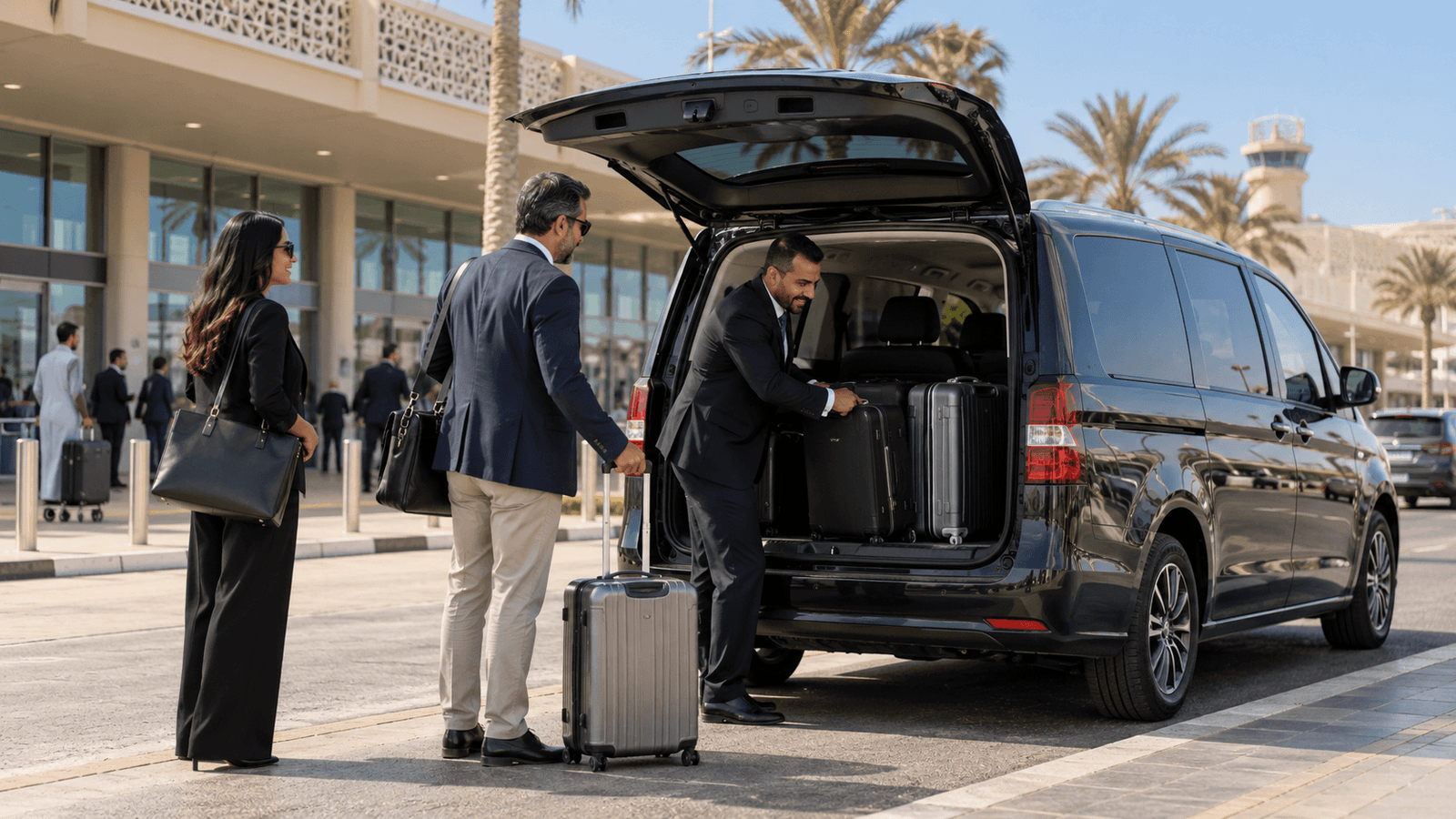
For many international visitors, a private driver is the simplest way to handle city travel and regional day trips. It removes the need to negotiate each ride separately and makes it easier to connect hotels, airports, archaeological sites, meetings and restaurants in one day.
This is particularly useful around Tripoli. A traveler might begin in the city, continue to Sabratha on one day and visit Leptis Magna on another. Those are journeys where a vehicle and driver provide flexibility that a fixed public timetable cannot match. The driver can also be coordinated around the amount of time planned at each site.
Private transport becomes even more useful when luggage is involved or when an itinerary contains several stops. Instead of thinking about every transfer as a separate booking, the transport can be built into the daily program. For families and small groups, this often makes the journey feel calmer and more organized.
Libya Adventures uses private transport in its published tour programs and can discuss airport transfers, city movement and longer road sectors as part of a personalized itinerary. The exact vehicle and routing should be confirmed in the final proposal rather than assumed from a general webpage.
If your visit is for work rather than tourism, the same principle applies. A pre-arranged driver can connect the airport, hotel, offices and meeting locations. Our Libya Business Travel page explains the wider support available for business visits.
Domestic Air Travel
Getting Around Libya by domestic flight
Domestic flights can be the most efficient option when an itinerary crosses long distances. Libya is a large country, and routes between western, eastern and southern cities can consume significant time by road. Air travel can therefore protect sightseeing time on a short visit.
Libyan Airlines currently publishes domestic flight information from Mitiga to destinations including Benghazi, Sabha and Ghat. That confirms that domestic air travel remains an important part of the national transport picture. Travelers should still check operating day, airport, baggage conditions and departure time for their own dates before building the rest of the itinerary around a flight.
Tripoli-area flights may use Mitiga depending on the service. Benghazi is served by Benina International Airport, while Sabha is a key airport for southern Libya. The Libyan Civil Aviation Authority also publishes airport and aeronautical information, which is useful for confirming the broader airport network.
On a tour, a domestic flight should be treated as one confirmed sector inside the itinerary, not as an assumption. That is why our published programs state that final schedules and availability are confirmed before booking.
Check Libyan Airlines domestic flight information →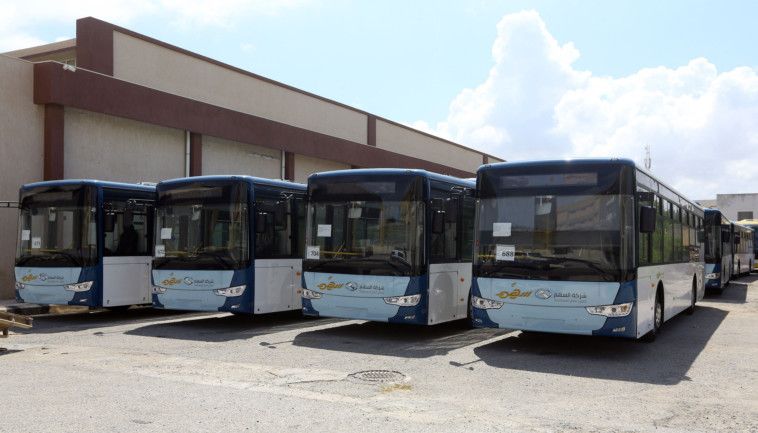
Capital City
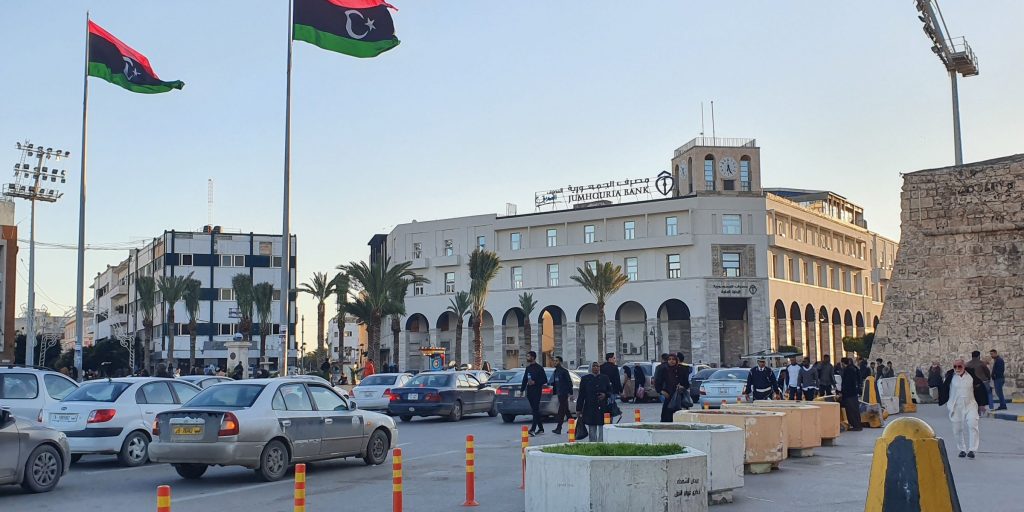
Getting Around Libya within Tripoli
Tripoli is the place where many journeys begin, and its transport needs are different from those of a cross-country itinerary. For a visitor staying in the capital, the main question is usually how to move between the hotel, Old City, seafront, restaurants, offices and airport without losing unnecessary time.
Taxis and local shared transport form part of everyday city movement. For a visitor, a taxi can work well for a straightforward point-to-point journey when the pickup and destination are clear. A pre-arranged driver is more practical when the day includes several stops, waiting time or an excursion outside the city.
The Old City is best appreciated partly on foot once you arrive in the area. Its narrow streets and souks are an experience rather than a driving route. A good city day can therefore combine vehicle transfers between districts with walking where the historic urban fabric is the attraction.
Airport transfers are worth arranging before arrival if you want the simplest start to the trip. That is particularly useful after a long international journey, when the priority is reaching the hotel rather than working out local transport on arrival.
For ideas on what to combine within the capital, see our Things to Do in Tripoli guide.
Intercity Road Travel
Getting Around Libya by road: cities and archaeological sites
Road transport remains central to Getting Around Libya, especially in the populated north and for day trips from Tripoli. It is the natural choice for places such as Sabratha and Leptis Magna, where the journey itself can be coordinated around the time you want to spend at the archaeological site.
Travelers should not rely on the old idea that Libya has “no speed limit.” Drivers should follow posted traffic rules and local road conditions. If you are using a private driver, the emphasis should be on realistic timing rather than trying to cover the greatest possible distance in one day.
Before a long road sector, confirm the vehicle, planned stops and fuel arrangements. This becomes increasingly important away from the main urban corridor. A long-distance itinerary should also leave enough margin for meals, breaks and changes in local timing.
For visitors interested in the Roman coast, road travel works particularly well. A private itinerary can connect Tripoli with Sabratha to the west and Leptis Magna to the east without turning either site into a rushed photo stop. Our Roman Archaeological Tour shows how these sites can be organized into a focused short journey.
A practical private road day for travelers focused on archaeology and the Mediterranean coast.
Best treated as a substantial archaeological visit with enough time to explore the ancient city.
Consider the value of a domestic flight when the goal is to connect western and eastern Libya efficiently.
Self-Drive & Rental Cars
Getting Around Libya by rental car or self-drive
Car rental may be available in major cities, but it should not be treated as the default solution for every traveler. Rental availability, accepted driving documents, insurance requirements, deposit rules and the permitted use of a vehicle can vary by company. Confirm those details directly with the rental provider before making a plan.
If you intend to self-drive, remember that traffic uses the right-hand side of the road. More important than that basic rule is understanding your route. Navigation inside a city is one challenge; driving between distant cities or into remote regions is another. A rental vehicle that works for Tripoli is not automatically the correct choice for desert travel.
For Getting Around Libya on a structured tour, private transport usually keeps the logistics simpler because the vehicle, driver and daily route can be coordinated together. In the Sahara, specialized local transport is the more appropriate category altogether.
Taxis, Buses & Rail
Getting Around Libya by taxi, bus and rail
Taxis
Taxis are useful for shorter urban trips. They are most convenient when the destination is clear and you do not need a vehicle to wait through a long visit or several separate stops.
Buses & shared vehicles
Buses and shared local transport are part of everyday movement, but they are not always the most practical basis for a tightly planned visitor itinerary. For multiple attractions, private transport is easier to coordinate.
Railways
Libya does not currently have a normal operating intercity passenger railway network for visitor travel. The national railway project authority continues to describe a planned network linking the country, so rail should be viewed as infrastructure under development rather than a present travel option.
Fezzan & the Sahara
Getting Around Libya in the south and desert regions
The Sahara changes the transport question completely. A road transfer between two northern cities and a journey through desert terrain are not comparable. Southern itineraries require route knowledge, appropriate vehicles and coordination with the local team.
Sabha is an important gateway in many southern travel plans. From there, the next stage may involve road travel toward Germa, Ubari or another desert region. Once the itinerary moves away from standard urban roads, 4×4 transport and local route experience become more important.
On our Ubari Camel Trek, for example, the published plan combines a domestic flight to Sabha with a meeting in Germa and onward desert transport. That illustrates the general principle: use air travel to cover the long national distance, then use the correct local transport for the desert segment.
Desert transport should be arranged around the exact route, season, group size and camp plan. The purpose is not simply to “get a 4×4,” but to make sure the vehicle support fits the itinerary. If the journey includes a camel-supported trek, the road team and trekking team also need to connect at the correct points.
See the Ubari Camel Trek route →Transport Map
Getting Around Libya: understand the distances before you book
The map is useful for visualizing why a mixed transport strategy can make sense. Tripoli, Benghazi and Sabha sit in very different parts of a large country, while many heritage day trips are concentrated closer to the northern coast.
Frequently Asked Questions
Getting Around Libya FAQ
What is the best way of Getting Around Libya?
Are there domestic flights in Libya?
Is there a passenger train network in Libya?
How should I travel from Tripoli to Leptis Magna or Sabratha?
How do travelers reach southern Libya?
Does Libya Adventures arrange transport?
Continue Planning
More practical Libya travel guides
Plan Your Transport
Build the route first. Then make every transfer fit the journey.
For Getting Around Libya, tell us your travel dates, arrival city, group size and the places you want to visit. Libya Adventures can discuss the appropriate combination of airport transfers, road transport, domestic flights and desert arrangements.
Send an Enquiry →