
Eastern Libya Archaeology · 2026
Tokra Libya: 8 Amazing Ancient Sights & Day Trip Guide
Tokra Libya, known in archaeological literature as Tocra or ancient Taucheira, is a remarkable coastal site east of Benghazi where Greek settlement, Hellenistic fortifications, Roman industry and Byzantine defenses can still be read across the landscape.
This guide replaces the older short article with a fuller look at the city walls, gates, towers, pottery industry, ancient port, Christian remains and the practical experience of visiting Tokra as part of an eastern Libya itinerary.
Coastal Archaeology
Why Tokra Libya deserves more than a quick stop
Tokra Libya is one of the less internationally known ancient cities of Cyrenaica, yet its archaeological story is unusually long. The settlement is known as Taucheira or Teucheira in Greek contexts and later appears as Arsinoe during the Ptolemaic period.
Archaeological evidence shows that Greek activity at the site began very early. Pottery recovered during excavations points to settlement by the late seventh or early sixth century BCE, placing Taucheira among the oldest Greek settlements on the southern Mediterranean coast.
Its importance did not end with the Greek period. The city continued through Hellenistic, Roman and Byzantine centuries, and archaeological work has documented defenses, churches, a fortress, industrial areas, pottery kilns and evidence associated with its coastal economy.
This long sequence makes Tokra Libya especially useful for travelers trying to understand Cyrenaica beyond the famous ruins of Cyrene and Apollonia. Instead of concentrating on one monumental building, Tokra allows visitors to study an entire fortified city.
The setting adds another dimension. The ruins sit close to the Mediterranean, surrounded by a low coastal landscape rather than the elevated terrain of the Green Mountain. That contrast makes Tokra a natural addition to a broader eastern Libya route.
One City, Several Names
Tokra, Tocra, Taucheira and Arsinoe refer to the same historic place
Travelers may encounter several spellings when researching Tokra Libya. This can initially make the archaeological literature confusing, but the names reflect different languages and periods rather than different archaeological cities.
Taucheira, Teucheira and Tauchira are forms commonly associated with the ancient Greek city. Tocra is widely used in English archaeological publications, while Tokra or Tukrah reflects modern transliterations of the local name.
During the Ptolemaic period the city was renamed Arsinoe. That name appears in later historical material and is another reminder that Cyrenaica was repeatedly connected to wider Mediterranean political systems.
On this page we use Tokra Libya for search clarity and modern travel planning while retaining Tocra and Taucheira when discussing archaeological research.
From Greek Colony to Late Antiquity
Tokra Libya preserves more than a thousand years of urban history
Early Greek ceramics discovered at Taucheira have played an important role in discussions about the chronology of Greek settlement in Cyrenaica. Evidence suggests that the town was established very early in the history of Greek colonization of the region, close in time to the traditional foundation period of Cyrene.
The city developed as a coastal settlement within the network of Greek communities in Cyrenaica. Ancient writers place Taucheira among the Greek cities of the region, while archaeological evidence points to trade links across the Mediterranean.
Under the Ptolemies, Taucheira became Arsinoe. Roman rule later brought additional phases of urban and commercial life. Excavations have revealed pottery production, workshops and other evidence showing that Tokra Libya was a place where people worked and manufactured goods as well as traded.
During Late Antiquity, Christianity became visible through churches and other religious architecture. The defensive system was also rebuilt and strengthened during the Byzantine period.
Archaeological evidence suggests that occupation did not simply stop at one political transition. Finds from later levels, including early Islamic material, point to continuity and reuse after the Byzantine era.
Early settlement and maritime links developed on the Cyrenaican coast.
Taucheira was renamed Arsinoe and remained part of the regional urban network.
Workshops, pottery production and urban activity continued around the fortified settlement.
Walls were substantially rebuilt and Christian architecture became prominent.
Sight 01 · Fortifications
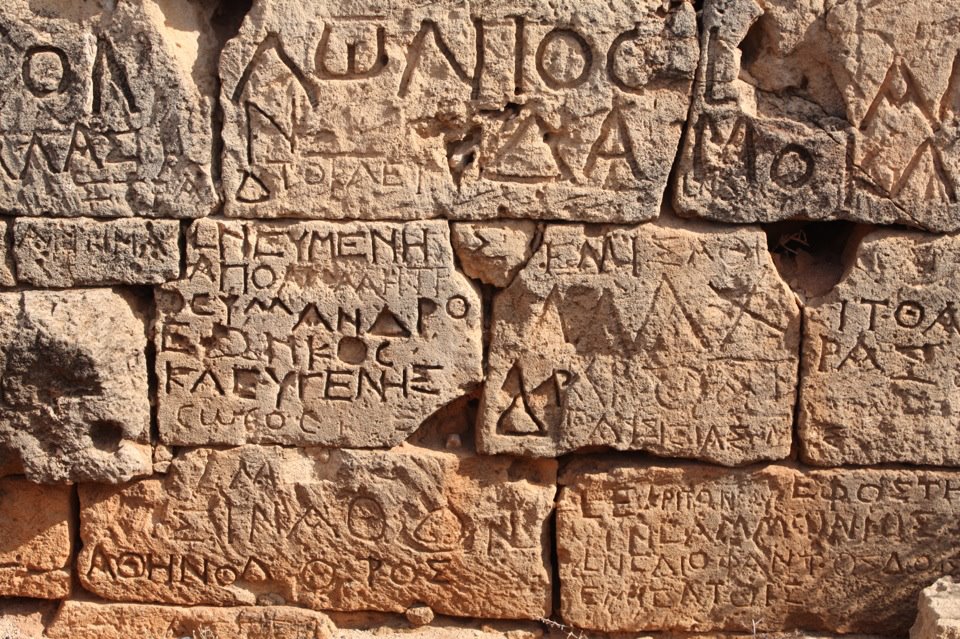
The city walls are one of Tokra Libya’s most impressive surviving features
The fortified circuit is one of the clearest reasons to visit Tokra Libya. Archaeological research published in Libyan Studies records more than two kilometers of fortifications when the sea wall is included.
The curtain wall could reach roughly two meters in width and was reinforced by rectangular towers. Researchers documented 31 towers around the defensive system, giving the visitor a sense of how seriously the city approached protection and control of its perimeter.
The walls do not belong to a single moment. Studies distinguish Hellenistic phases from later rebuilding. Some sections show carefully laid ashlar blocks, while later work changed or strengthened the system.
A major reconstruction is associated with the Byzantine emperor Justinian. Gates, towers and sections of the walls were rebuilt, transforming earlier defenses for the military needs of Late Antiquity.
Walking beside these remains helps make the scale of ancient Taucheira easier to understand. The walls define the city itself, creating a clear archaeological boundary between the urban area and the surrounding coastal plain.
Including the ancient sea-wall according to archaeological survey.
Documented as part of the defensive system.
Hellenistic development followed by major later rebuilding.
Sight 02 · Gates & Towers
Gates reveal how the defenses of ancient Taucheira evolved
The gates of Tokra Libya were more than simple openings in a wall. They controlled movement, connected the city with regional roads and formed some of the most vulnerable points in the defensive circuit.
Archaeological research identifies major reconstruction of the East and West Gates during the Byzantine period. The broader fortification study also notes unusual defensive features that help distinguish Tocra from other fortified cities in North Africa.
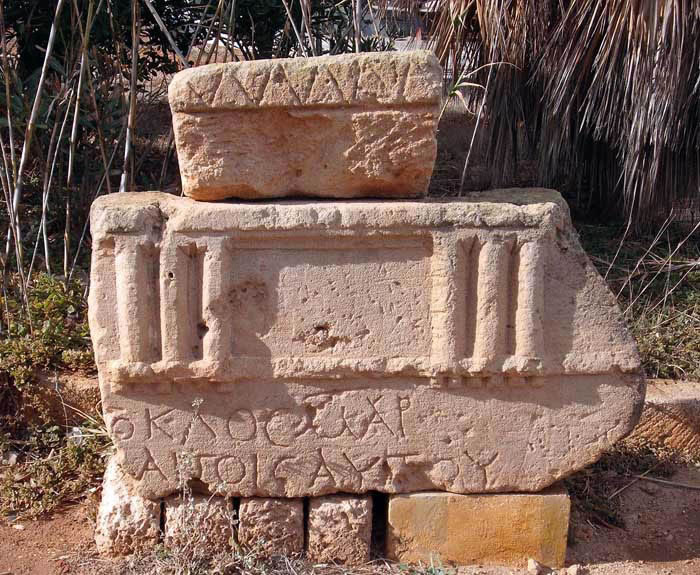
Visitors should look closely at changes in masonry rather than expecting every wall to belong to one date. Different styles of stonework can preserve the sequence from earlier Hellenistic defenses to later modifications.
This is one of the strengths of visiting Tokra with someone familiar with the archaeology: details in blocks, towers and gates can turn a seemingly simple wall into a chronological record.
Sight 03 · Workshops & Pottery
Pottery production reveals everyday economic life at Tokra Libya
Monumental architecture often dominates archaeological travel, but some of the most useful evidence at Tokra Libya comes from manufacturing areas and pottery.
Archaeologists excavated a kiln area northwest of the West Gate. Later research within the city also identified evidence of an artisan district containing a pottery kiln, ovens, vats and related working structures.
These discoveries show that Tokra was not simply a ceremonial or defensive settlement. It was a working city with craftspeople, production areas and commercial activity.
Pottery fragments are also valuable for dating archaeological levels. Thousands of sherds recovered during research have helped archaeologists compare Tokra with other Cyrenaican sites such as ancient Berenice at Benghazi.
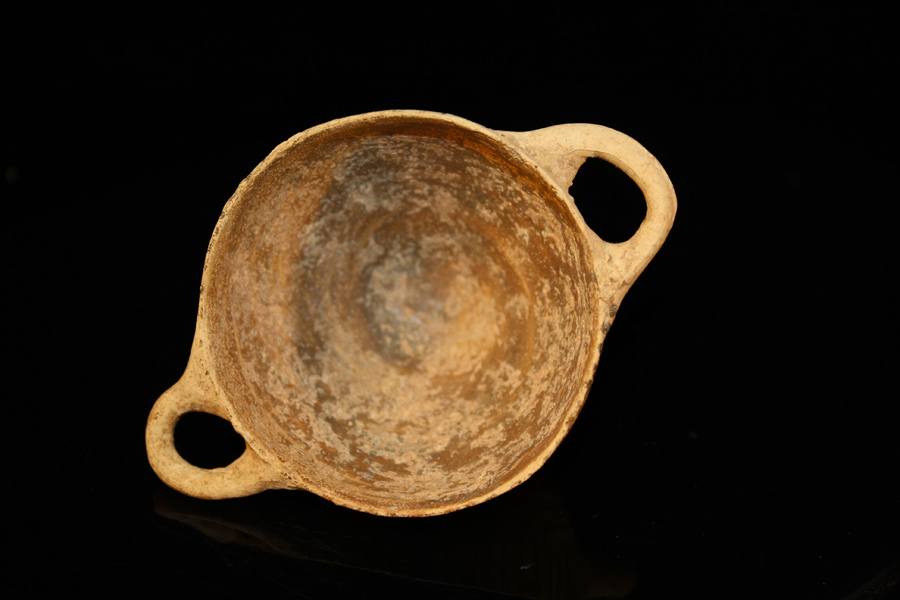
A simple terracotta bowl therefore tells a larger story. Its clay, shape and context can reveal information about production, chronology, trade and daily meals that monumental walls alone cannot provide.
Sight 04 · Mediterranean Coast
Tokra Libya was connected to the wider Mediterranean through its port
Ancient Taucheira developed directly on the coast, and maritime connections were fundamental to the city’s identity. Archaeological finds show contacts with other parts of the Greek world, while the port helped connect local production and the Cyrenaican hinterland to wider Mediterranean networks.
Today the coastline gives Tokra Libya much of its atmosphere. The setting is flatter and more open than the cliffs around parts of the Green Mountain, with sandy stretches and small bays characterizing the wider coast toward Ptolemais.
Recent archaeological survey work along this part of Cyrenaica continues to emphasize the richness of coastal heritage. Ancient harbors were not isolated points; they formed part of a chain of settlements connecting maritime travel with inland communities.
Visitors should therefore take time to look outward from the ruins toward the sea. The Mediterranean is not simply a background for photographs—it explains why the city developed where it did.
Sights 05–06 · Late Antique City
Byzantine Tokra combined rebuilt defenses, churches and a military fort
The later history of Tokra Libya is especially visible in its defensive architecture. Under Justinian, sections of the fortifications were extensively reconstructed as part of wider efforts to strengthen cities across Byzantine North Africa.
Earlier stone was reused in the walls, sometimes at the expense of older buildings inside the city. This recycling of architectural material is itself an archaeological clue, showing how priorities shifted from earlier civic construction toward defense.
Christianity also shaped the later urban landscape. Archaeologists have identified churches at the site, while a fortified complex inside the walls reflects the military role of the settlement.
Excavation and survey suggest that the fortress remained significant beyond the initial Arab conquest of Cyrenaica in the seventh century. That evidence complicates any simple idea that the ancient city was instantly abandoned after one historical event.
These layers make Tokra useful for understanding transition. Greek streets, Roman economic activity, Byzantine churches and later reuse are all parts of the same urban story.
Sight 07 · Archaeological Landscape
Tombs and excavated areas extend the story beyond the city center
Archaeological study at Tocra has also included tombs and areas outside the central urban zone. These remains help researchers understand how the living city related to burial landscapes, quarries, roads and production areas beyond the walls.
This is an important correction to the older version of this article. There is no need to describe the principal ruins as underground Berber houses connected by tunnels. The documented archaeology already offers a much stronger story through Greek settlement, tombs, fortifications, kilns, churches and the later fortress.
For visitors, this also means that Tokra Libya should be explored as a landscape rather than a single monument. Archaeological interest continues beyond the most obvious walls.
Sight 08 · Archaeological Finds
Archaeological objects help explain life inside Tokra Libya
Excavations at Tokra have produced ceramics, coins, architectural evidence and other objects that help archaeologists reconstruct daily life and the chronology of the city.
The older page referred to a small local museum. Because opening and display arrangements can change, travelers should confirm current access locally rather than assuming a museum collection will always be open on a particular day.
Even when an indoor collection is not part of the visit, understanding the excavated objects changes the experience of walking through Tokra Libya. Pottery links buildings with kitchens, workshops and trade; coins help establish chronology; architectural fragments reveal changes in construction and decoration.
The archaeological site therefore works best when monumental and everyday evidence are considered together.
Eastern Libya Day Trip
Tokra Libya works naturally as a day trip from Benghazi
Tokra lies east of Benghazi along the coastal side of Cyrenaica, making it a practical archaeological excursion for travelers using Benghazi as their base.
A day focused on Tokra Libya gives visitors time to examine the walls, gates and internal archaeological areas without immediately continuing to a second major site. This slower approach is useful for people especially interested in archaeology or photography.
Another option is to use Tokra as the first stage of a longer eastern route. Continuing farther east brings travelers toward Ptolemais, Cyrene, Apollonia and the Green Mountain.
Each city tells a different part of the Cyrenaican story. Benghazi connects ancient and modern urban life; Tokra emphasizes fortifications and long settlement continuity; Ptolemais preserves a major planned city; Cyrene reveals monumental Greek and Roman architecture; and Apollonia explains the maritime world of Cyrene.
Read our Benghazi and Eastern Libya guide when planning the wider journey.
Begin from eastern Libya’s major city and transport hub.
Explore the walls, archaeological areas and Mediterranean setting.
Continue east for another important classical coastal city.
Extend the journey into the Green Mountain and ancient Cyrenaica.
Practical Visit
How to explore Tokra Libya comfortably and respectfully
Archaeological sites reward time. Instead of trying to photograph every feature immediately, begin by understanding the outline of the ancient city and the direction of the Mediterranean. Then examine walls, towers, gates and internal remains more closely.
Comfortable footwear is useful because archaeological ground can be uneven. Sun protection and drinking water are sensible throughout much of the year, even when coastal wind makes temperatures feel comfortable.
Cooler months are generally better for long outdoor visits. October through April usually offers more comfortable conditions for archaeological walking than the hottest part of summer.
Site conditions and access can change. A locally planned visit makes it easier to confirm which areas are accessible and how much time should be allowed.
Visitors should not remove pottery fragments or stones, climb fragile walls, or move archaeological material for photographs. The remains have survived for centuries precisely because their context still matters.
Do not reduce Tokra to a five-minute photo stop.
Archaeological surfaces and stone can be uneven.
Leave pottery, stones and architectural fragments where they are.
Check local opening and site arrangements for your travel date.
Beyond the Famous Sites
Why Tokra Libya adds depth to an eastern Libya itinerary
Cyrene and Apollonia deserve their international reputation, but adding Tokra changes the way a traveler understands eastern Libya. The region was not built around one or two isolated cities; it contained a network of coastal ports, inland settlements, agricultural zones and roads.
Tokra Libya is particularly valuable because its fortifications remain such a strong part of the site’s identity. At the same time, excavated workshops and pottery demonstrate the daily economic activity that took place behind those walls.
The result is a more human view of ancient Cyrenaica. Visitors see not only temples and monumental civic architecture but also defense, production, transport, trade and adaptation across many centuries.
This is why Tokra also belongs naturally in our Hidden Gems in Libya collection and complements our broader Places to Visit in Libya guide.
Eastern Libya
Map: Tokra Libya and Benghazi
This map shows Tokra’s position east of Benghazi on the Mediterranean side of Cyrenaica. It is intended for geographic context rather than turn-by-turn driving directions.
Frequently Asked Questions
Tokra Libya FAQ
What is Tokra Libya known for?
Are Tocra and Taucheira the same place?
Was Tokra one of the ancient cities of Cyrenaica?
How old is ancient Taucheira?
What is special about the walls at Tokra Libya?
Can Tokra be visited as a day trip from Benghazi?
Is there a museum at Tokra?
When is the best time to visit Tokra Libya?
Research references: archaeological information on Taucheira/Tocra, its fortifications, pottery production and coastal history is based on specialist archaeological research rather than the unsupported claims in the older version of this article.
Libya Adventures · Since 2011
Planning an archaeological journey through eastern Libya?
Libya Adventures can help build a private route connecting Benghazi, Tokra, Ptolemais, Cyrene, Apollonia, Susa and the Green Mountain, depending on your travel dates and interests.
Request trip information →