
Libya Adventures · Expedition Field Guide
Best Outdoor Activities in Libya: Sahara, Hiking & Desert Adventures
Libya is a country of enormous outdoor contrasts. Along the Mediterranean, the landscape opens toward beaches, headlands and ancient coastal cities. Travel south and the scale changes completely: dunes stretch across the horizon, rocky massifs rise from the Sahara, desert lakes appear between sand ridges and prehistoric rock art records thousands of years of human life. For travelers who prefer experiencing a destination on foot and in the open air, Libya offers far more than traditional sightseeing.
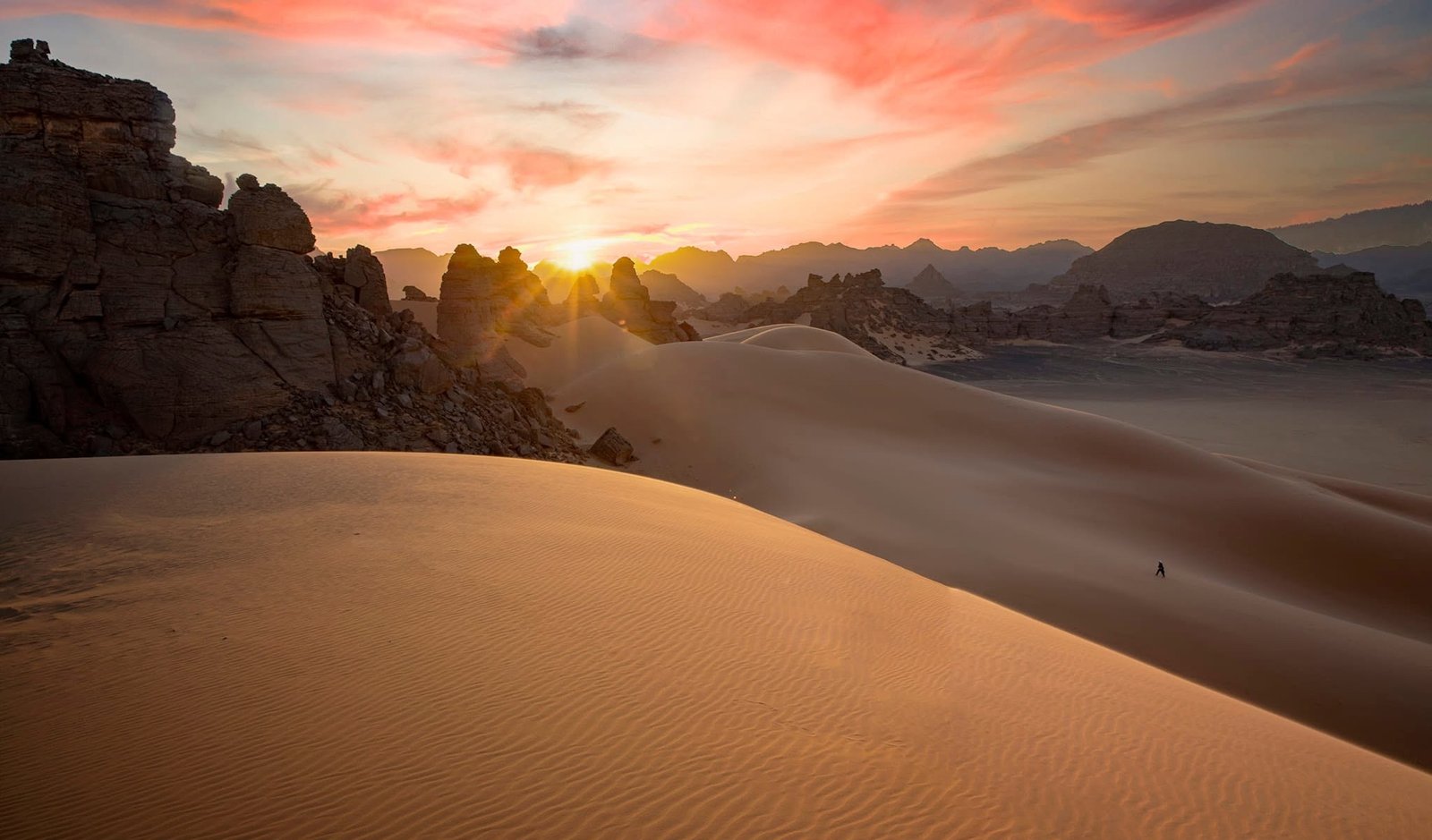
A different way to experience Libya
The best outdoor activities in Libya are closely connected to the geography of the country. This is important because Libya is not one single landscape. The Mediterranean coast in the north has a completely different character from the vast arid regions of the south. Around Tripoli and the northwestern coast, travelers can combine city visits with beaches, archaeological walking and sea views. In Fezzan, the experience is defined by sand, rocky massifs, oasis landscapes, dramatic light and a sense of distance that is difficult to reproduce anywhere else.
Earlier travel descriptions sometimes tried to present outdoor Libya mainly through extreme sports. A better way to understand the country is to focus on experiences that naturally belong to its landscapes. Walking is one of the most rewarding. It can mean several hours across the dunes of Erg Ubari, moving between rock formations in the Acacus region or spending a morning exploring the streets and monuments of an archaeological city. The pace is slower, but that is exactly what makes the landscape memorable.
Desert travel is especially powerful because the journey itself becomes the activity. There may be no single attraction at the end of the route. Instead, the changing shape of a dune, the silence between camp stops, the contrast between sand and water at a desert lake or the discovery of prehistoric imagery on a rock face becomes the experience. This kind of travel rewards curiosity rather than speed.
Libya Adventures has been organizing journeys in Libya since 2011, and our itineraries reflect this approach. Rather than promising every possible adventure sport, we focus on experiences that can be built responsibly around real routes: camel-supported trekking, desert camps, Sahara walking, cultural exploration, private road journeys and historical sites that are best experienced on foot.
This guide brings those possibilities together. It is designed to help you understand what different outdoor experiences feel like, which landscapes suit them best and how to choose an itinerary that matches your preferred level of activity.
Adventure Journal
Libya outdoors, one landscape at a time
Outdoor travel is not defined by one activity. The experience changes constantly as you move between open desert, rocky terrain, cultural landscapes and the Mediterranean north.
Sahara Activity 01
Sahara trekking: experience the desert at walking pace
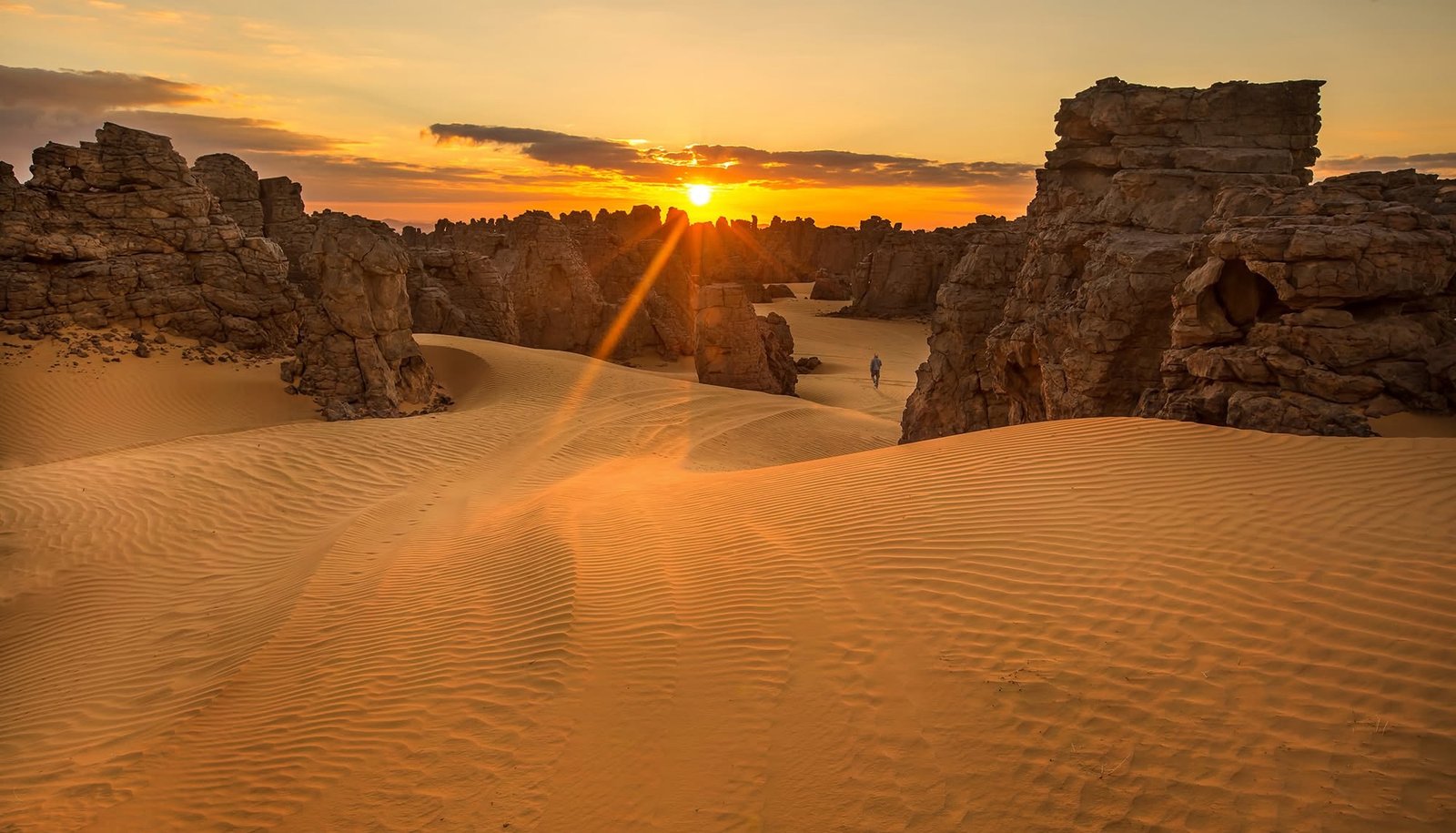
A desert can look empty from a distance. Once you begin walking through it, the opposite becomes true. Small changes in texture, wind, vegetation, tracks, light and the shape of the dunes become part of the journey.
Walk the landscape
Why trekking changes the Sahara experience
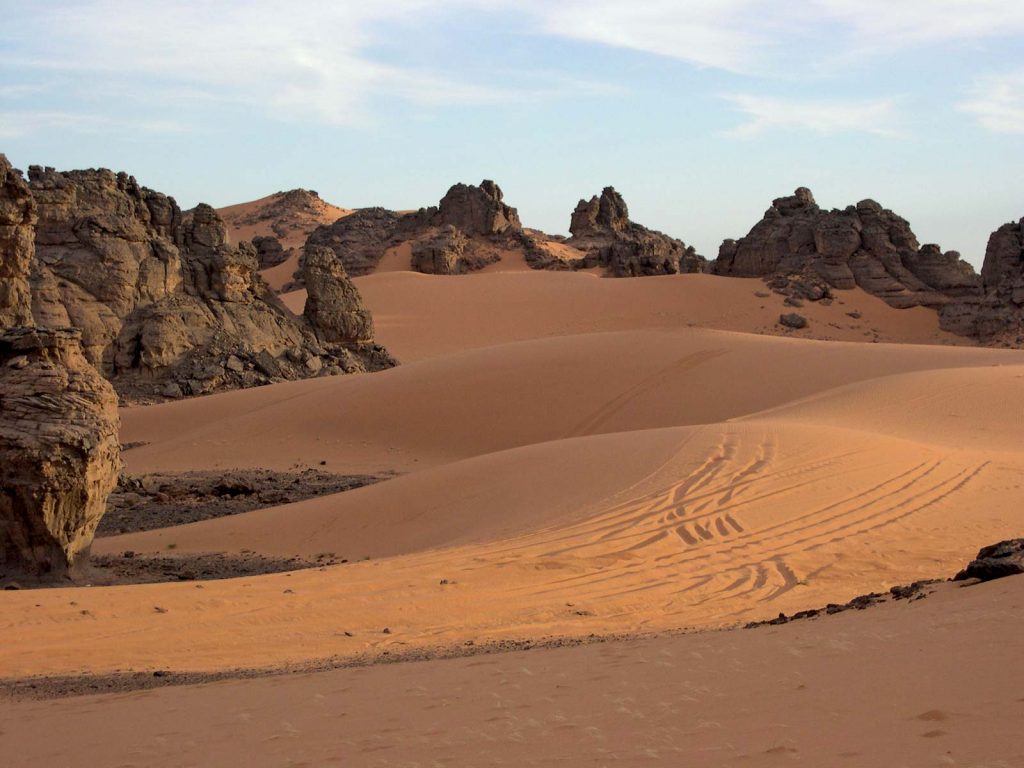
Driving through the Sahara lets you cover great distances, but walking creates a completely different relationship with the terrain. Your attention shifts from destination to detail. Sand becomes softer or firmer depending on the slope. Shadows reveal ridges that disappear in direct light. A line of palms in the distance can signal a dramatic transition between bare dunes and an oasis environment.
Trekking does not have to mean racing across difficult terrain. On our desert programs the aim is to establish a comfortable rhythm, take regular breaks and allow the journey to unfold naturally. Walking on sand requires more effort than walking on a paved surface, which is why realistic daily distances are more useful than ambitious claims.
The most memorable desert walks often happen in simple moments: leaving camp after breakfast, following the crest of a dune for a better view, reaching a high point before sunset or approaching palms and water after hours of sand. The activity and the landscape become inseparable.
Sahara Activity 02
Camel-supported trekking through Erg Ubari
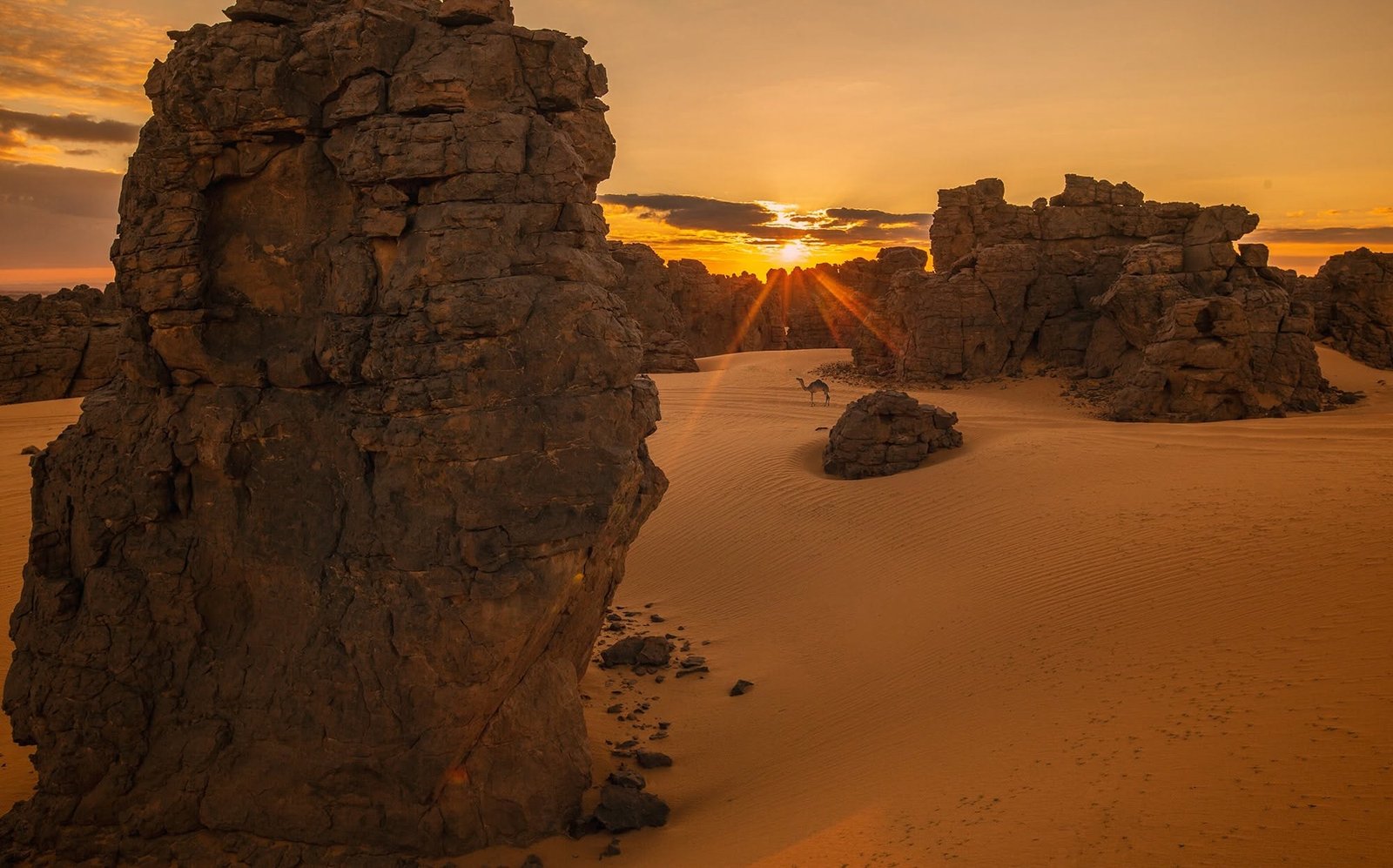
The image of a camel crossing Saharan dunes is one of the most familiar symbols of desert travel, but our Ubari journey is better described as a camel-supported walking trek rather than an eight-day camel ride. That distinction matters. Travelers move through much of the landscape on foot while the desert team and camels support the expedition. Riding arrangements can be discussed for individual departures, but the core activity is walking.
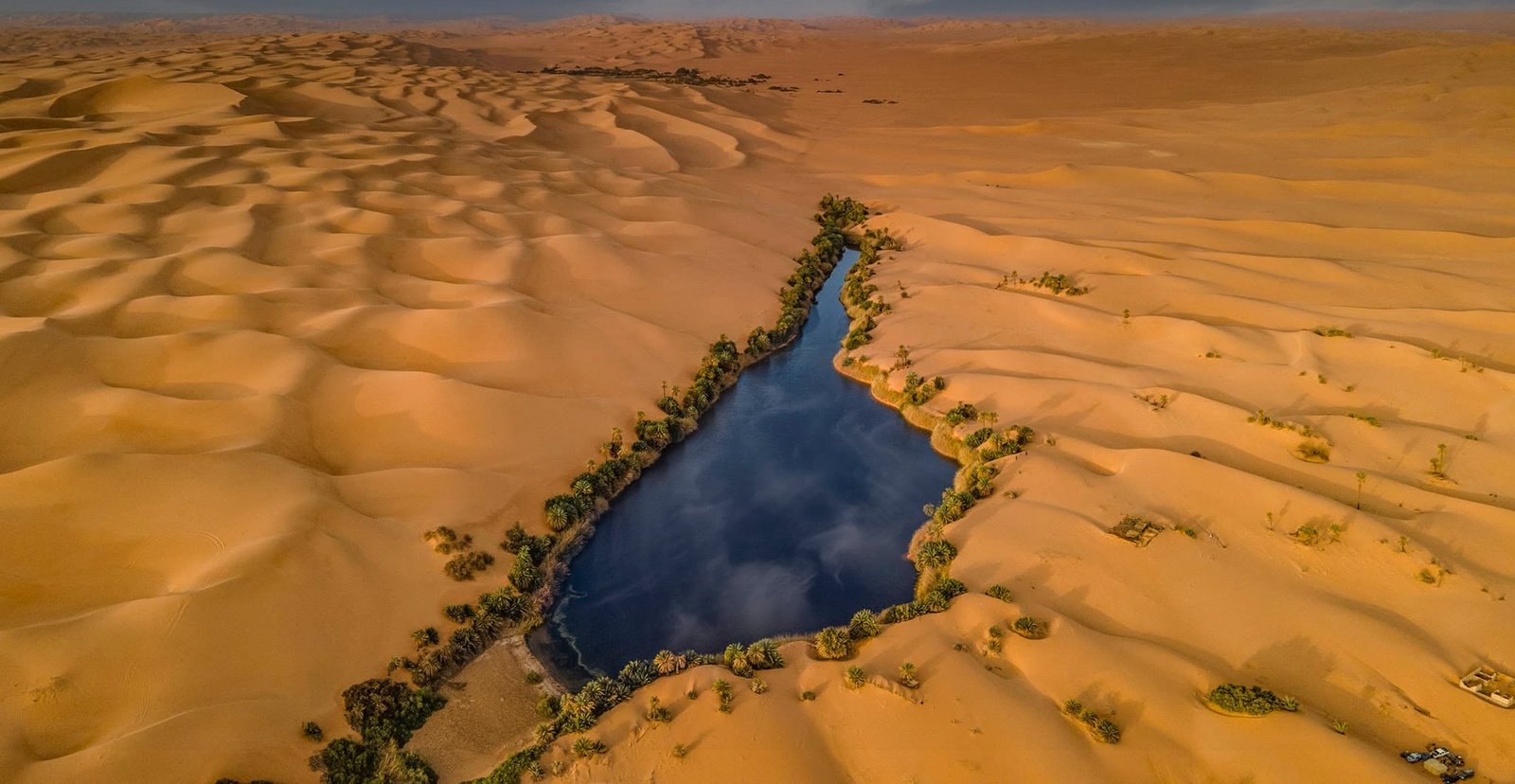
Our current Ubari Camel Trek is an eight-day program, with approximately three to four hours of walking on most trekking days. The route focuses on Erg Ubari and the lake region, including planned stops around places such as Gabraoun, Mahfou, Oum El Ma and Mandara. Water levels and local conditions can change, so the desert is experienced as a living landscape rather than as a fixed checklist.
What makes this journey particularly rewarding is the contrast. High sand dunes dominate much of the horizon, yet palms, vegetation and water can suddenly appear between them. The scenery changes again at evening when low sunlight gives the dunes deeper shadows and warmer tones. After sunset, camp life becomes part of the adventure: food, conversation, preparation for the following day and the simple pleasure of spending the night away from the city.
We currently plan this trek for the cooler desert season, from October to April. That schedule is important because outdoor activity in southern Libya should be designed around the desert environment rather than promoted as identical throughout the year.
Camel-supported trekking, desert camps, Erg Ubari dunes and the desert lake region, with around 3–4 hours of walking on most trekking days.
Sahara Activity 03
Walk through Tadrart Acacus and prehistoric Sahara history
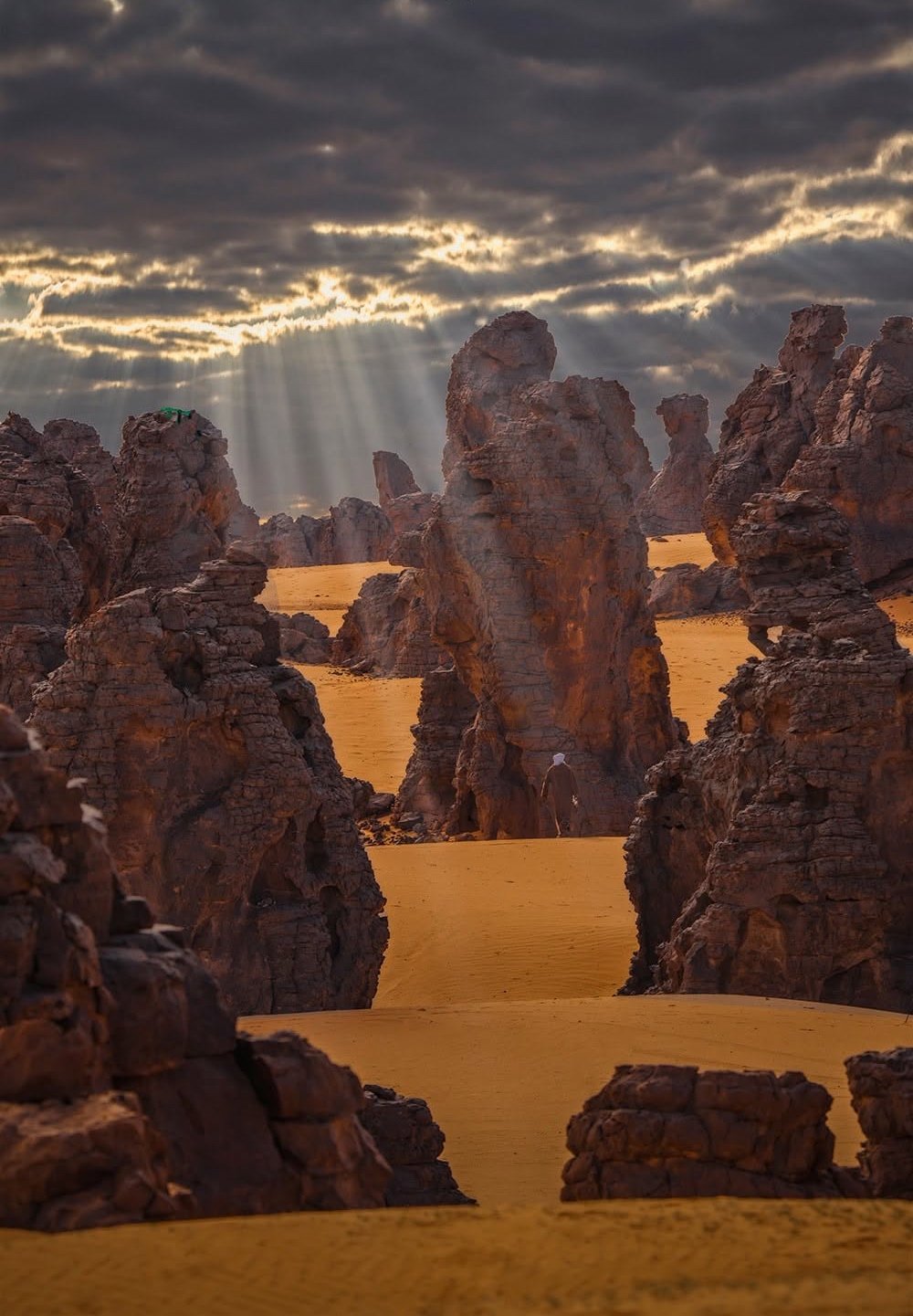
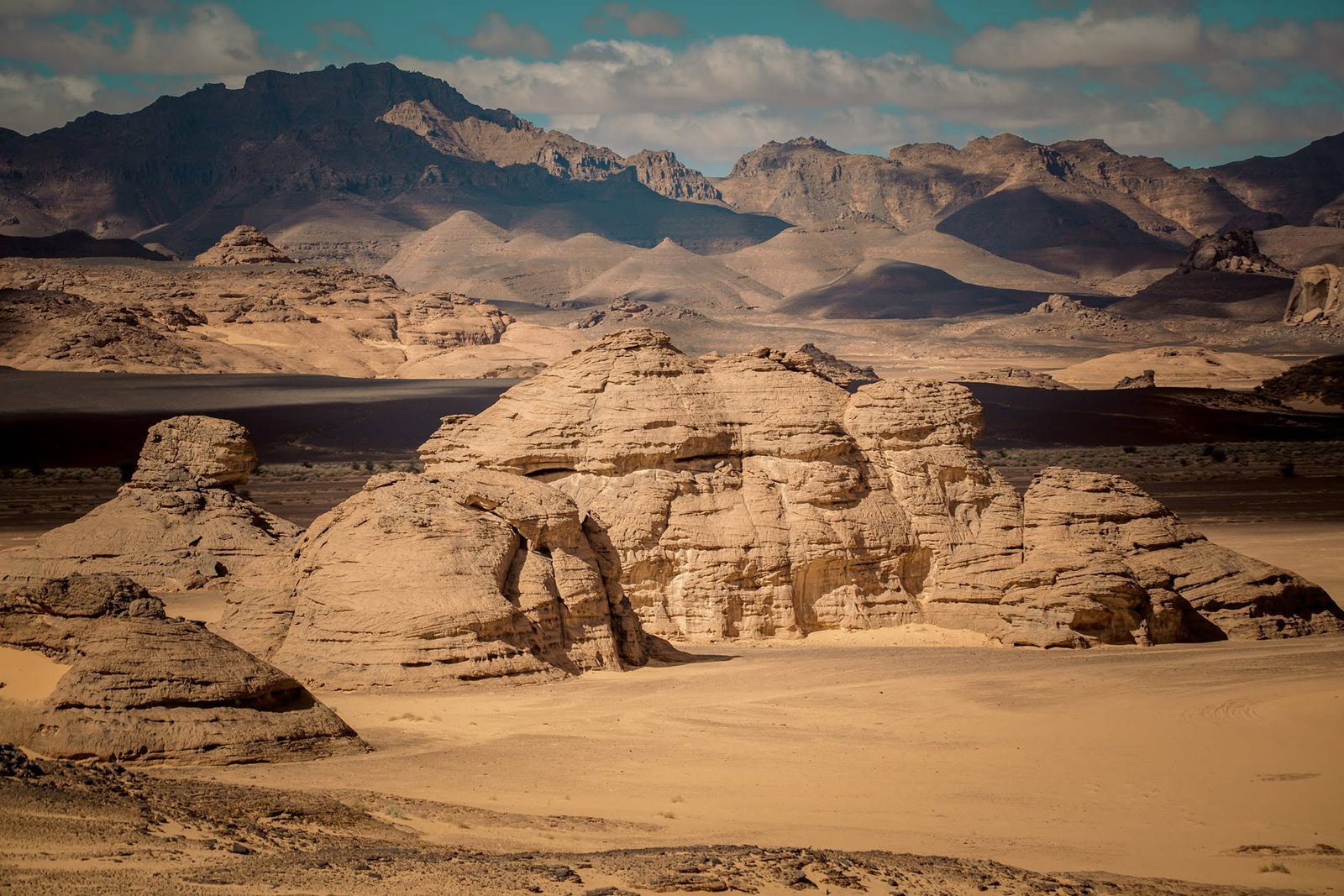
Tadrart Acacus offers a very different outdoor experience from the rolling dunes of Ubari. Here the landscape is shaped by rock: massifs, passages, cliffs and open desert terrain create a natural setting that feels architectural in scale.
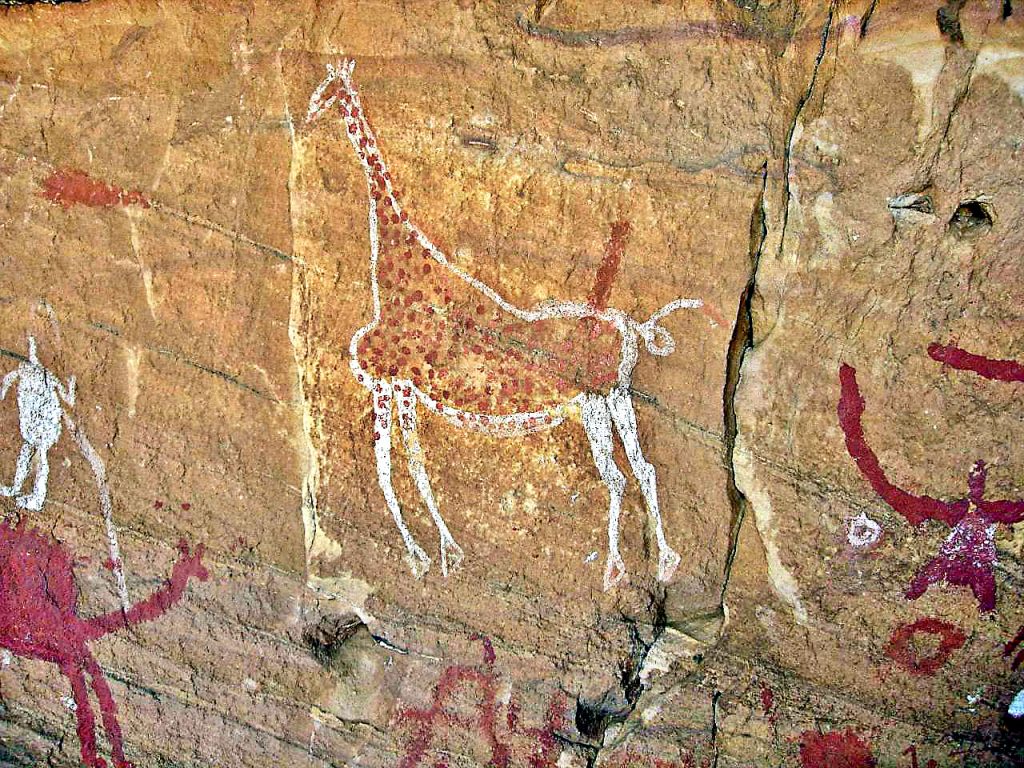
The region is internationally important for its prehistoric rock art. UNESCO describes thousands of paintings in different styles spanning an extraordinary period of Saharan history. The images provide evidence of changing animals, environments and ways of life, transforming a walk through the landscape into something much deeper than a scenic hike.
This is why we prefer the idea of rock-art walking and landscape exploration rather than making broad promises about technical rock climbing. The strongest experience is moving carefully through the landscape, observing geological formations and stopping at heritage locations with appropriate guidance.
In Acacus, the outdoors and history cannot really be separated. You are not entering a museum building and then returning to nature. The mountain, the route, the rock surface and the imagery belong to the same experience.
Read our dedicated Tadrart Acacus Rock Art guide for a deeper introduction to the region.
Sahara Activity 04
Desert camping: when the journey continues after sunset
Camping is not simply accommodation between desert activities. In a well-planned Sahara journey, the evening is part of the outdoor experience. The pace changes as temperatures drop, the light disappears and the camp becomes the center of the night.
During a multi-day trek, camp creates continuity. You do not leave the desert at the end of the afternoon and return to a conventional hotel. Instead, the same environment that shaped the day’s walk remains around you. The dunes change color as the sun lowers, the horizon becomes less defined and ordinary sounds become much more noticeable in the quiet.
Desert camping also changes the rhythm of travel. A journey becomes less about repeatedly packing for transfers and more about settling into a simple expedition routine. Meals, equipment, sleeping arrangements and departure times are coordinated around the next day’s route. For many travelers, this becomes one of the most memorable elements of the trip.
Facilities vary by itinerary and camp arrangement, which is why we confirm sleeping equipment and camp details before departure rather than promising a single setup for every journey. The right expectation is important: desert camping is attractive because of where you are, not because it imitates a city hotel.
Watch the landscape change
Low light reshapes the dunes and creates some of the strongest photography conditions of the day.
Slow down between trekking days
Camp provides time to eat, rest, talk with the team and prepare for the following morning.
Start directly from the desert
Instead of transferring back into the landscape, the next stage of the journey begins from where the previous day ended.
Northern Libya
Mediterranean coastlines and beach landscapes
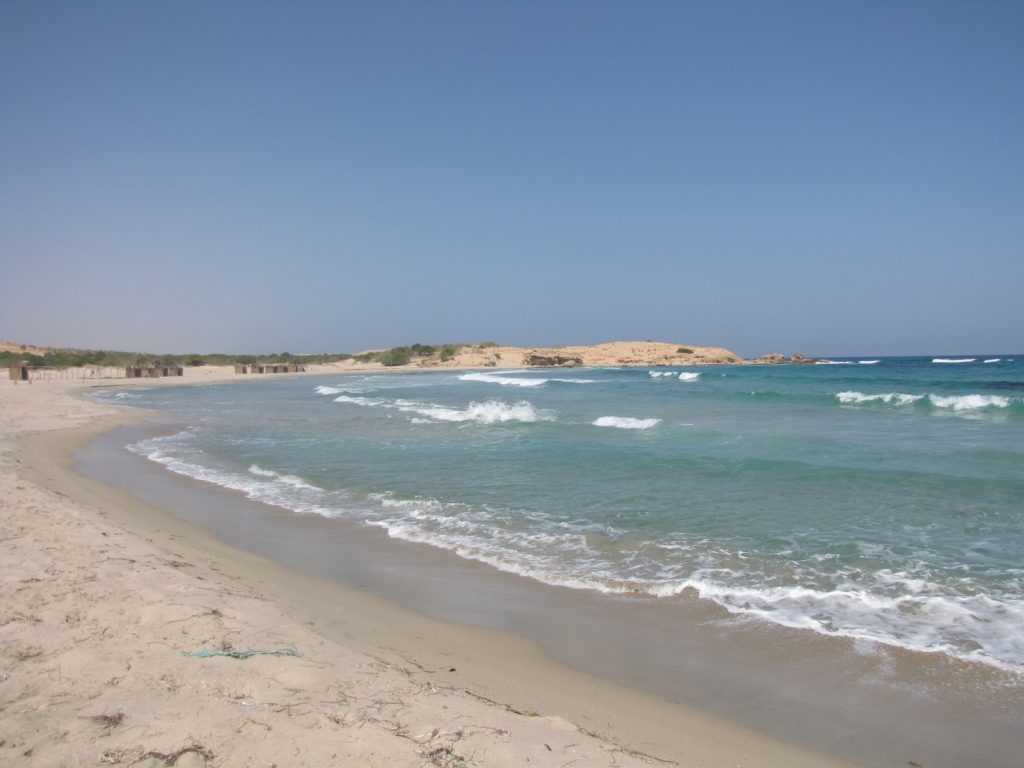
Libya’s northern edge faces the Mediterranean, giving outdoor travelers a completely different environment from the Sahara. Around coastal areas, blue water, pale beaches and open sea views provide a natural contrast to archaeological cities and urban visits.
The coast is best approached as a landscape experience rather than with broad promises that every type of water sport will always be available. Local facilities and services can change. What remains constant is the geography itself: a long Mediterranean coastline that can add swimming, seaside walks, photography and relaxed outdoor time to a wider itinerary when local arrangements are suitable.
Coastal scenery also works particularly well alongside Libya’s ancient heritage. Sabratha sits directly beside the Mediterranean, while other historical areas in northern Libya remind visitors that maritime access helped shape settlement and trade for centuries.
Travelers who spend most of their journey in the desert often appreciate the contrast when they return north. The change from dunes and dry horizons to the color and movement of the sea makes the country’s geographic scale much easier to understand.
Outdoor Activity 05
Archaeological walking: outdoor history on a monumental scale
Not every outdoor experience requires wilderness. Some of Libya’s most rewarding days on foot take place among ancient streets, theatres, temples, forums and coastal ruins.
Walk through a complete urban landscape
Large archaeological sites are best appreciated at walking pace. Moving between monumental buildings allows visitors to understand scale in a way that individual photographs cannot. Instead of seeing isolated ruins, you begin to recognize streets, public spaces and the relationship between different structures.
This type of walking can be surprisingly active. Archaeological ground is uneven, distances can be substantial and many areas are exposed to direct sun. Comfortable shoes, water and a realistic pace are more useful than trying to cover every corner quickly.
Combine ancient architecture with coastal scenery
Sabratha demonstrates how naturally history and outdoor travel can combine in Libya. The famous Roman theatre is only part of the experience. Walking through the wider site brings visitors to civic, religious and domestic remains, while the Mediterranean setting gives the day a strong sense of place.
If your preferred outdoor activity is walking rather than demanding trekking, archaeological days can provide an excellent middle ground: physically engaging, visually interesting and closely connected to Libya’s cultural history.
Adventure Atlas
Outdoor Libya stretches from the Mediterranean to Fezzan
The map below is intended as a geographic overview. Libya’s strongest outdoor experiences are spread across very different regions, so itinerary planning should consider travel time and the character of each landscape.
When is the best time for outdoor activities in Libya?
There is no single answer for every activity because Libya covers very different environments. Conditions on the northern Mediterranean coast are not the same as conditions deep in the Sahara. This is why saying that every outdoor activity works equally well throughout the year can be misleading.
For extended desert walking, cooler months are generally the logical period to plan around. Our current Ubari Camel Trek is scheduled from October through April. Even within that period, travelers should be prepared for strong daytime sun and large differences between daytime and evening conditions.
Coastal activities follow a different rhythm. Warm-weather visits may work well for beach time, while cooler periods can be comfortable for long archaeological walks. Wind, local conditions and the specific activities included in your itinerary also matter.
Rather than selecting dates based on a generic national weather description, decide what you actually want to do first. A traveler planning an intensive Sahara trek has different priorities from someone focused on Tripoli, Roman archaeology and the Mediterranean coast.
Expedition Preparation
What to bring for an outdoor journey in Libya
Packing should match the itinerary rather than a generic desert checklist. A trekking program, a coastal cultural journey and a Roman archaeology tour all require slightly different priorities.
Choose shoes for the route
Comfortable walking shoes are essential. Desert sand, rocky terrain and archaeological surfaces place different demands on footwear, but stability and comfort matter in all three.
Plan for long outdoor exposure
A hat, suitable clothing and sun protection are useful even in cooler seasons because many activities involve hours in open terrain.
Prepare for temperature changes
Desert days and evenings can feel very different. Lightweight layers make it easier to adjust as conditions change.
Hydration matters
Your itinerary should account for drinking water, but having an accessible personal bottle is useful whenever you are walking.
Protect equipment from sand
Fine sand can reach camera and phone equipment easily. Simple protective storage is particularly useful on multi-day Sahara journeys.
Confirm equipment before departure
For camping itineraries, we confirm sleeping arrangements and equipment in your personalized program so you know what is supplied and what to bring.
Find Your Adventure
Which outdoor Libya experience suits you?
The best itinerary is not necessarily the one with the most activities. It is the one that matches how you like to travel.
Desert trekking
Choose this if you enjoy several hours of walking, simple camp routines and experiencing the Sahara slowly over multiple days.
Tadrart Acacus
Ideal if the combination of prehistoric heritage, rocky landscapes and outdoor exploration interests you more than pure physical challenge.
Archaeological walking
A strong option if you enjoy being active but prefer Roman cities, cultural interpretation and comfortable returns to city accommodation.
Coast & scenic touring
Combine shorter walks, Mediterranean scenery, road journeys and cultural stops without committing to a multi-day trek.
Travel Thoughtfully
Leave the landscape as you found it
Outdoor travel becomes more valuable when the landscape remains unchanged for the next visitor. In the desert, that means treating camp areas carefully, taking rubbish with the group and avoiding unnecessary damage to vegetation or geological features. In archaeological areas, it means walking through the site without climbing on fragile structures or removing even small objects.
Tadrart Acacus deserves particular care because natural landscapes and cultural heritage overlap. Prehistoric paintings and engravings are not decoration for a photograph; they are irreplaceable historical evidence. Visitors should observe them without touching, tracing, wetting or altering the surfaces.
Photography should also be approached with respect. Landscape photography is one of the great pleasures of a Libya journey, but people are different from landscapes. Ask before photographing local residents, guides or craftspeople at close range.
These habits do not make a journey less adventurous. They make it more meaningful. The best outdoor travelers are curious enough to explore and disciplined enough to leave the places they visit intact.
Travel with Libya Adventures
Build outdoor experiences into a private Libya itinerary
Some travelers want a trip centered almost entirely on the Sahara. Others want only one active element inside a broader journey. Both can work. An eight-day Ubari trek is appropriate for someone who wants desert walking and camping to define the trip, while a historical itinerary can include long days on foot without becoming a trekking expedition.
We can also help connect regions logically. Outdoor Libya covers large distances, so the sequence of the itinerary matters. Combining Tripoli, Roman heritage, Fezzan and deeper desert regions requires more planning than placing several attractions on a list.
Start with the experience that matters most to you. Tell us whether your priority is desert trekking, rock art, camping, archaeology, photography or a mixture. We can then discuss the dates, pace and destinations that make sense together.
Frequently Asked Questions
Outdoor Activities in Libya FAQ
What are the best outdoor activities in Libya?
Can I go trekking in the Sahara in Libya?
Is the Ubari Camel Trek mainly camel riding?
What is special about Tadrart Acacus?
Can I camp in the Libyan Sahara?
What is the best time for Sahara trekking in Libya?
Are there outdoor activities on Libya’s Mediterranean coast?
Can Libya Adventures arrange a private outdoor itinerary?
Your Libya Adventure
Choose the landscape. We will help shape the journey.
Whether you want several days walking through the Sahara, a camel-supported Ubari expedition, the rock-art landscapes of Acacus or a journey combining outdoor experiences with Libya’s ancient cities, send us your preferred dates and travel style. We can discuss a private itinerary built around the places you most want to experience.
Send an Enquiry →