
Old City · Mediterranean · History · Local Life
Top Things to Do in Tripoli, Libya: 2026 City Guide
Discover Tripoli through its old medina, Roman arch, national museum, mosques, traditional souks, waterfront, local food and some of the capital’s best-known landmarks.
Welcome to the capital
Tripoli A Mediterranean city where Roman, Islamic, Ottoman and modern Libya meet.More than a starting point for a Libya journey
Tripoli is often the first city travellers encounter in Libya, but it deserves more than a quick overnight stop. The capital combines a historic medina, Roman remains, mosques, traditional markets, museums and a Mediterranean waterfront within a relatively compact central area.
The Old City is where many of Tripoli’s most interesting layers come together. Walk from the Arch of Marcus Aurelius through narrow lanes, past historic houses, mosques and markets, before emerging toward Martyrs’ Square and the Red Castle.
Outside the historic centre, Tripoli continues through modern neighbourhoods, cafés, parks and the Mediterranean coastline, while major archaeological sites such as Leptis Magna and Sabratha can be incorporated into journeys based in the capital.
Tripoli city guide
10 top things to do in Tripoli
If this is your first time in Libya’s capital, these ten places and experiences provide a strong introduction to Tripoli’s history, architecture and everyday life.
Walk through Tripoli’s Old City
Explore the lanes, courtyards, historic buildings, mosques and markets inside the medina.
See the Arch of Marcus Aurelius
Visit Tripoli’s best-known surviving Roman monument in the heart of the Old City.
Visit the Red Castle & National Museum
Explore Libya’s history inside one of Tripoli’s most recognizable landmarks.
Cross Martyrs’ Square
Experience one of the city’s main public spaces beside the Old City and Red Castle.
Visit the House of Karamanli
Step inside a historic Tripoli house and see a different side of the city’s domestic architecture.
Browse the traditional souks
Discover jewellery, traditional crafts, perfumes, clothing and everyday market life.
See Gurgi Mosque
Admire one of the Old City’s distinctive historic mosques and its decorative architecture.
Explore the Clock Tower area
Continue through the medina’s streets and historic public spaces around the old centre.
Walk by the Mediterranean
Experience Tripoli as a coastal capital and enjoy another side of the city away from the medina.
Visit Tripoli Zoo
The Abu Salim Zoo reopened in March 2026 following extensive renovation and redevelopment.
The heart of old Tripoli
Walk through the Old City
Tripoli’s medina is not one single attraction. It is a network of streets, courtyards, markets, mosques, historic houses and small public spaces that reward slow exploration.
The official Libyan tourism guide highlights the Old City as a concentration of Mediterranean, African and eastern architectural influences. Its historic markets include Souq al-Mushir, Souq al-Turk, the jewellery market and traditional craft areas.
Rather than trying to rush from landmark to landmark, allow time simply to walk. Details in doors, arches, workshops, minarets and old façades are a large part of the experience.

02 / Roman Tripoli
Stand beneath the Arch of Marcus Aurelius
Before Tripoli became the city we know today, this part of the coast was the Roman city of Oea. The Arch of Marcus Aurelius is the most recognizable surviving monument from that ancient period.
Built in the second century AD, the arch now sits within the Old City, creating an unusual meeting point between classical Roman stonework and the surrounding medina.
It is one of the best places to begin a walking tour because many other Old City landmarks can be reached from here.
03 / Museum
Libyan National Museum
Located inside the Red Castle beside Martyrs’ Square, the museum provides a broad introduction to Libya’s archaeological and cultural history.
Visit the Red Castle and National Museum
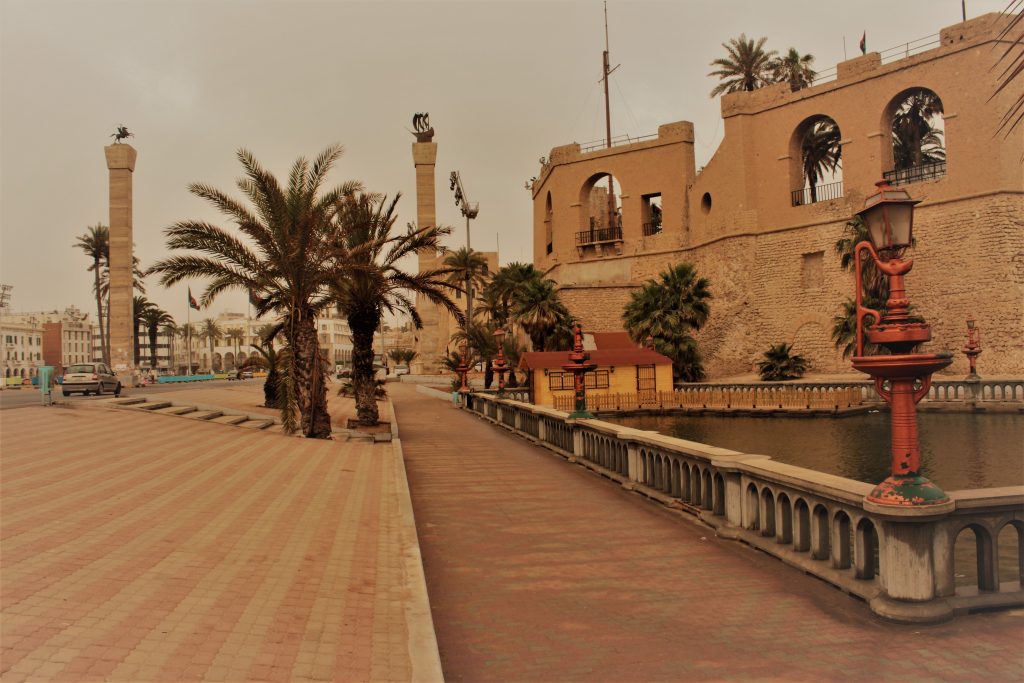
The Red Castle, or Assaraya Al-Hamra, is one of Tripoli’s defining landmarks. Its position beside Martyrs’ Square places it between the Old City and the modern centre.
The Libyan National Museum is currently open to visitors inside the Red Castle and presents material connected with the many periods of Libya’s history.
If you are travelling beyond Tripoli to places such as Leptis Magna, Sabratha, Cyrene or Germa, visiting the museum first can give useful context to the archaeology you will see later.
Libyan National Museum →Central Tripoli
Walk through Martyrs’ Square
Martyrs’ Square sits beside the Red Castle and forms one of the main open spaces at the edge of the historic centre.
Its value for a visitor is partly its location. From here you can move toward the Old City, Red Castle, waterfront and surrounding central streets without treating each place as a separate journey.
The square also gives you a sense of the scale of central Tripoli after spending time inside the narrower streets of the medina.
Historic Tripoli
Discover the House of Karamanli
Historic Tripoli is not only about monumental buildings. Traditional houses help explain how people lived inside the Old City and how residential architecture was organised around courtyards and private spaces.
The House of Karamanli is one of the best-known examples connected with the Karamanli period of Tripoli’s history. A visit adds a domestic perspective after the larger scale of the castle, mosques and Roman arch.
It also fits naturally into an Old City walking route rather than requiring a separate excursion.
06 / Shopping & local life
Browse Tripoli’s traditional souks
The markets are part of the Old City’s character and offer a more everyday experience than simply moving between historical monuments.
One of the best-known market areas near the heart of the Old City.
Look for local textiles, jewellery, leatherwork, perfumes and other traditional products.
Some of the most interesting streets are those where craftspeople still work within the market environment.
Islamic architecture
See Gurgi Mosque and the Old City’s mosques
Tripoli’s historic mosques are an important part of the Old City’s architectural identity. Gurgi Mosque is particularly recognizable for its decorative Ottoman-era style and distinctive minaret.
Other historic mosques in the medina help show how Tripoli developed through different Islamic and Ottoman periods.
These are active religious places, so visitors should dress respectfully and follow local guidance when entering.
Old Tripoli
Explore the Clock Tower and historic streets
Some of Tripoli’s most enjoyable moments come between the major attractions. Historic streets, old consulates, public squares and the Clock Tower area reveal additional layers of the city.
Libya’s Ministry of Tourism highlights the Old City for its mix of Mediterranean, African and eastern architectural styles as well as historic commercial buildings, baths and traditional markets.
A guided walk can make these smaller details easier to understand because many buildings do not announce their history with large signs.
09 / Mediterranean Tripoli
Spend time by the coast
Tripoli is a Mediterranean capital, and the sea is an important part of the city’s atmosphere.
Leave the narrow streets behind for a while and see another side of Tripoli along the Mediterranean.
The city often becomes more active later in the day, when families and friends head out after the heat eases.
A café stop provides a simple way to slow the day down between sightseeing visits.
The coastline helps explain why Tripoli’s history has always been closely connected to the wider Mediterranean.
Reopened on 21 March 2026 following extensive renovation and redevelopment.
Visit the renewed Tripoli Zoo
Tripoli’s zoo in Abu Salim returned as a visitor attraction in March 2026 after being closed for many years.
The redevelopment included renewed animal enclosures, landscaping, visitor facilities, children’s spaces and upgraded infrastructure across the park.
It is a different kind of stop from Tripoli’s historic attractions and can be especially useful for families or travellers spending several days in the capital.
Beyond sightseeing
Make time for Tripoli’s food and cafés
A city guide should not be only a checklist of monuments. Meals and café stops are part of experiencing everyday Tripoli.
Look for couscous, rice dishes, soups, grilled meats and home-style foods influenced by North African and Mediterranean cooking.
A short tea or coffee stop often becomes part of the rhythm of a day exploring the city.
Bakeries and sweet shops are worth adding between Old City walks and longer sightseeing visits.
Beyond the capital
Two outstanding day trips from Tripoli
Tripoli also works as a base for two of Libya’s most important Roman archaeological sites.
Leptis Magna
Explore monumental streets, arches, baths, a theatre and other remains of one of the Mediterranean’s great Roman cities.
Explore our Roman Archaeological Tour →Sabratha
Visit the coastal archaeological site best known for its monumental Roman theatre and Mediterranean setting.
Explore Tripolitania & Ghadames →Planning your time
How long should you spend in Tripoli?
Focus on the Old City, Marcus Aurelius Arch, Red Castle, National Museum and Martyrs’ Square.
Add the souks, historic mosques, Karamanli House, waterfront and more time for local food and cafés.
Explore the capital at a slower pace or include additional neighbourhoods and the zoo.
Use Tripoli as a base and add Leptis Magna, Sabratha or both to the itinerary.
Frequently asked questions
Things to do in Tripoli FAQ
What are the best things to do in Tripoli?
Is the Libyan National Museum open?
Is Tripoli Zoo open?
What can I see in Tripoli’s Old City?
How much time do I need in Tripoli?
Can I visit Leptis Magna from Tripoli?
Can I visit Sabratha from Tripoli?
Can Libya Adventures arrange a private Tripoli tour?
Continue planning
Explore more of Libya
Visiting Tripoli?
Explore the capital with local planning
Tell us your preferred dates, number of travellers and how much time you have in Tripoli. We can discuss a private city itinerary or combine the capital with Leptis Magna, Sabratha and a wider Libya journey.
Send an Enquiry →